
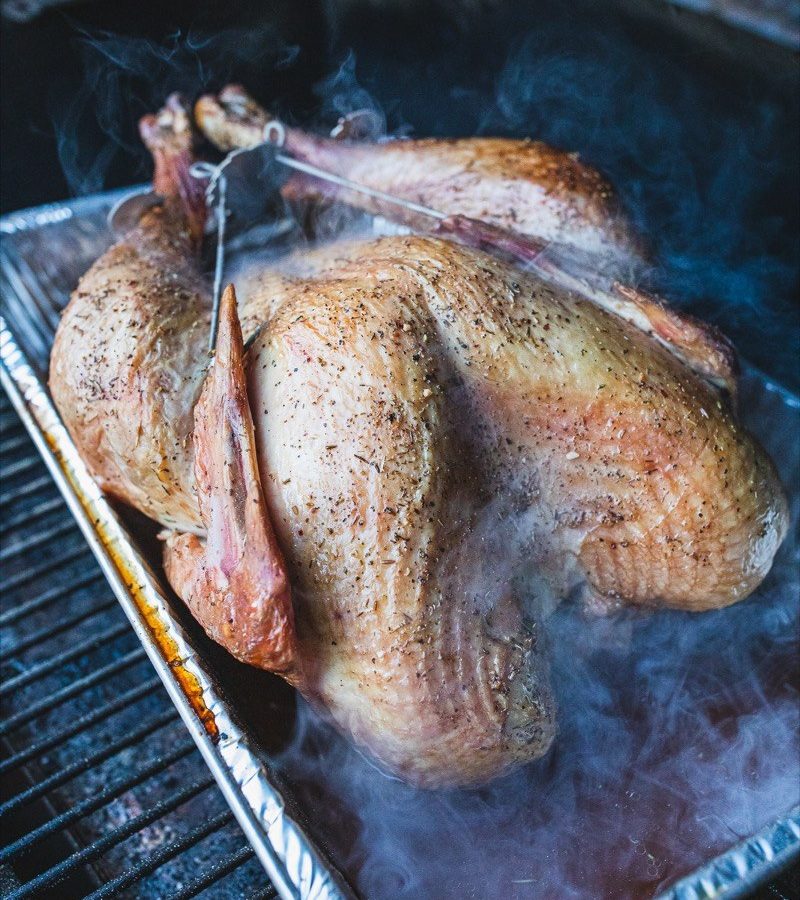
This Traeger Smoked Turkey is my favorite turkey method. Put away the gallons of frying oil, free up your oven, and consider donating that giant electric roaster you only pull out once a year — you’ll want Smoked Traeger Turkey every Thanksgiving and holiday from now on.
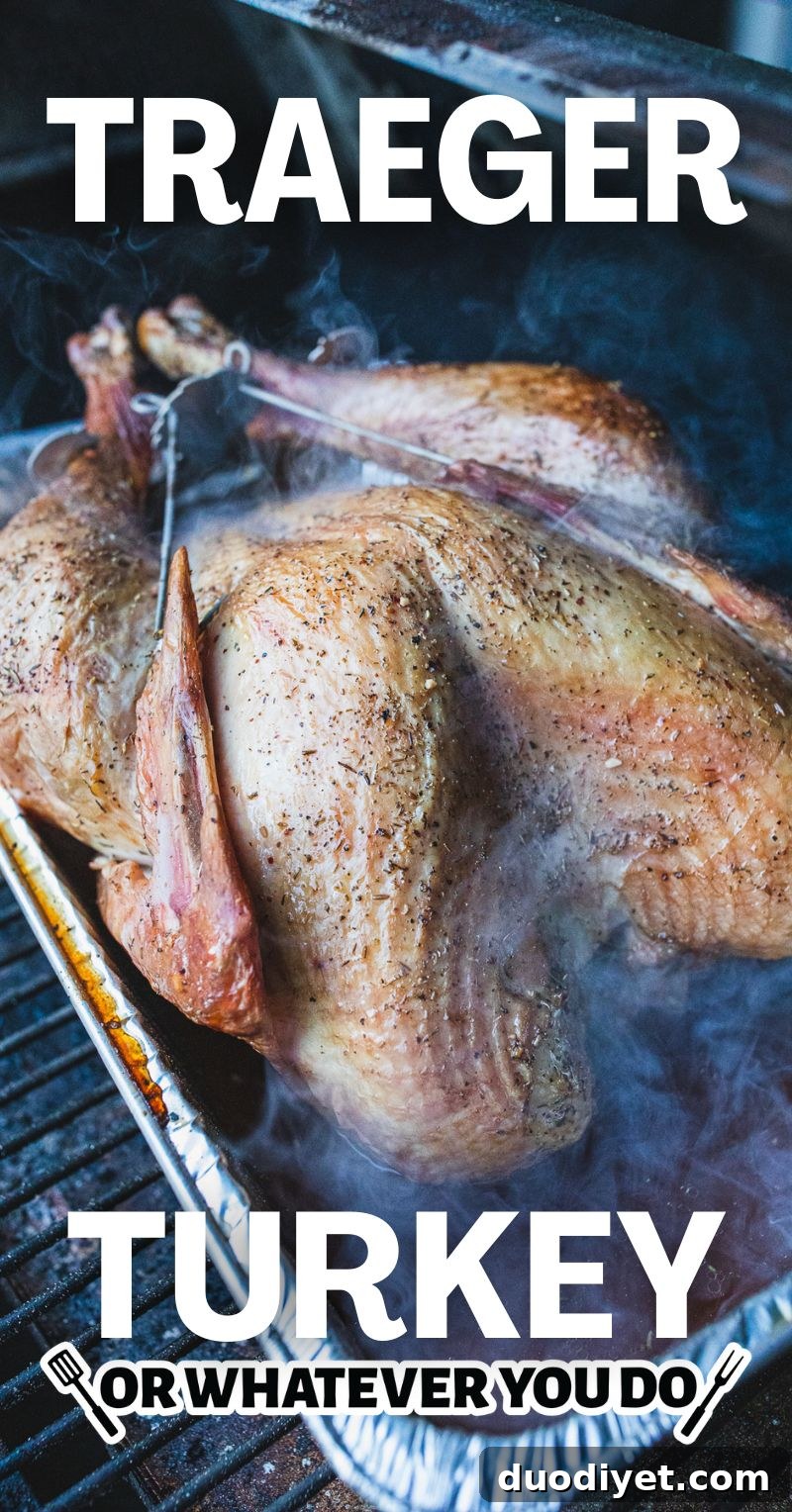
Traeger Smoked Turkey Recipe
If you love a moist, flavorful turkey with a hint of wood smoke and perfectly rendered skin, smoking on a Traeger (or any pellet grill) is the method to learn. The low-and-slow start followed by a higher finish produces a bird with great texture, subtle smoke, and drippings that make outstanding gravy. This recipe focuses on simple, reliable techniques so you can repeat it every year with confidence.
I often roast the bird in a rack inside a pan to catch drippings for gravy, then turn the carcass into stock afterward. That homemade stock is one of my favorite benefits of smoking a whole turkey — it makes the best gravy and soups, and it keeps you from reaching for boxed stock.
Why You’ll Love This Recipe
- Reliable and forgiving: Simple seasoning and steady temperatures make this method nearly foolproof.
- Frees up the oven: Smoke your turkey and use the oven for sides and pies.
- Better flavor: Wood smoke adds a savory dimension an oven won’t provide.
- Great drippings: The pan juices become an excellent base for gravy.
- Scales easily: Smoke one bird or two depending on your crowd.
Traeger Turkey vs. Deep-Fried vs. Oven-Roasted
Deep frying yields crisp skin and a fast cook but requires handling a large pot of hot oil. Oven roasting is familiar but ties up the oven and offers no added smoke flavor. Smoking combines steady low heat with smoky flavor, delivering moist meat and skin better than a conventional roast (though not as shatteringly crisp as frying), and it keeps your oven available for everything else.
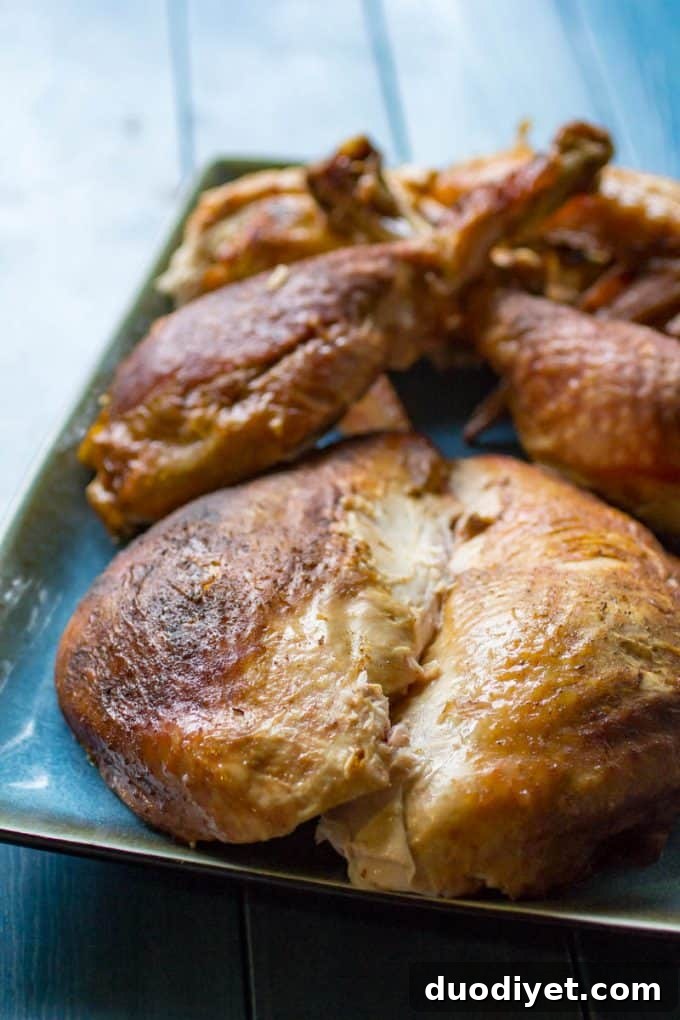
Recipe Shopping List
Here are the items you’ll need. See the ingredient list in the recipe card below for exact amounts.
- Turkey — 10–13 pounds is a good, predictable size. Larger birds work; allow more cook time.
- Olive oil — helps seasonings stick and promotes skin browning. Melted butter can be used for richer flavor.
- Ground poultry seasoning — a sage-thyme-rosemary blend or your favorite poultry seasoning.
- Kosher salt — measure carefully; table salt is much saltier by volume.
- Traeger Chicken Rub or any poultry-friendly rub you prefer.
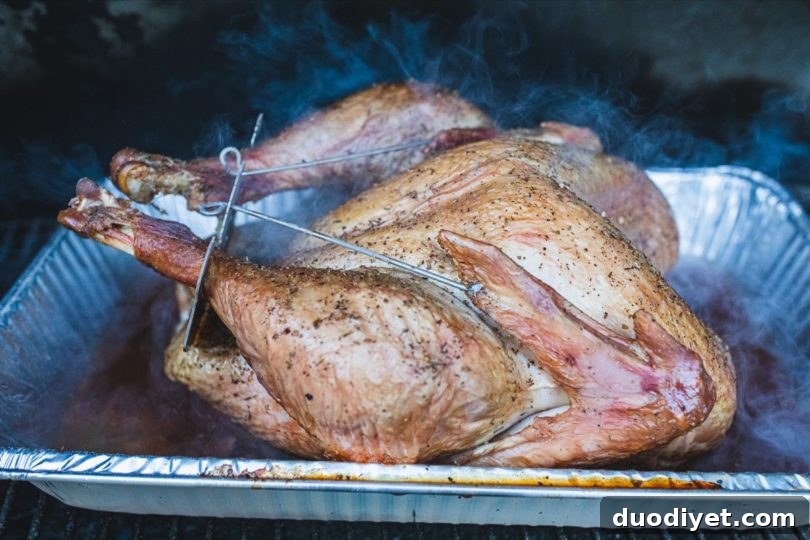
How To Make This Recipe — Overview
This summary gives the main steps so you can plan. Use the detailed recipe card below while you cook.
- Season the bird: Mix oil and seasonings and rub all over, including under the skin where possible.
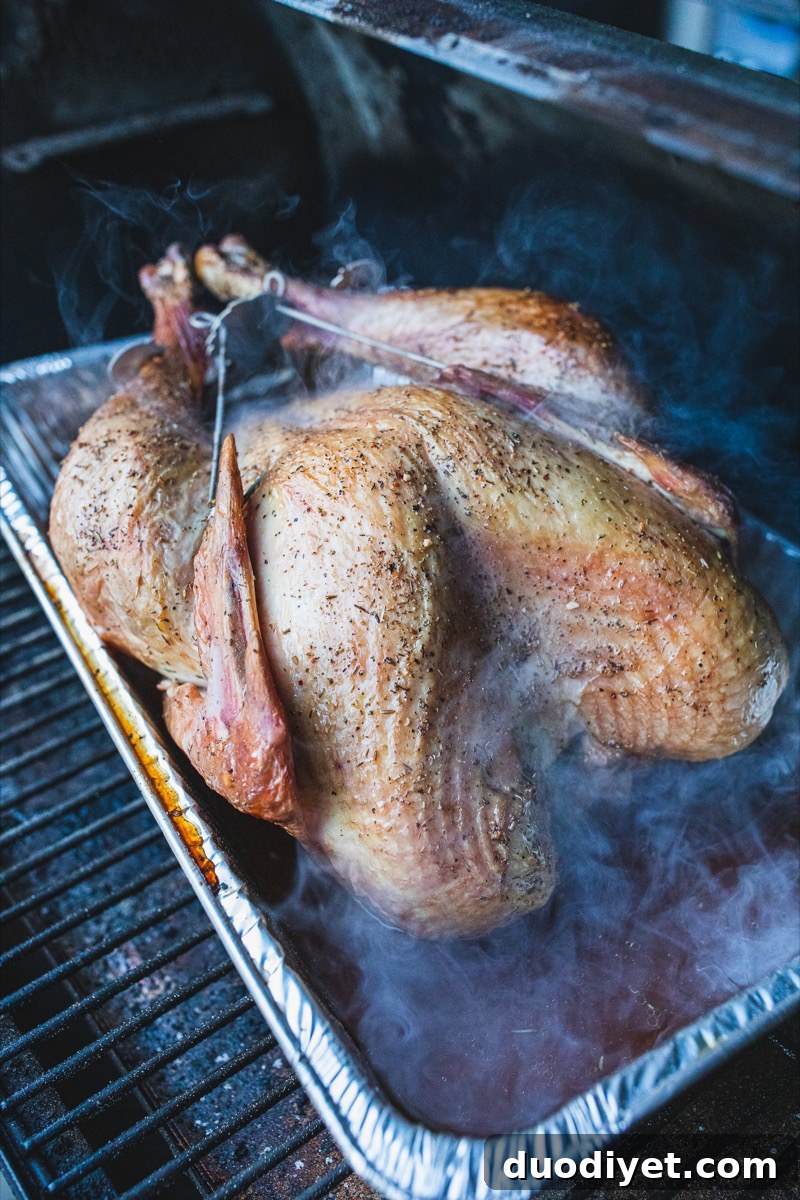
- Set it up: Place the turkey breast-up on a rack inside a roasting pan so air can circulate underneath.
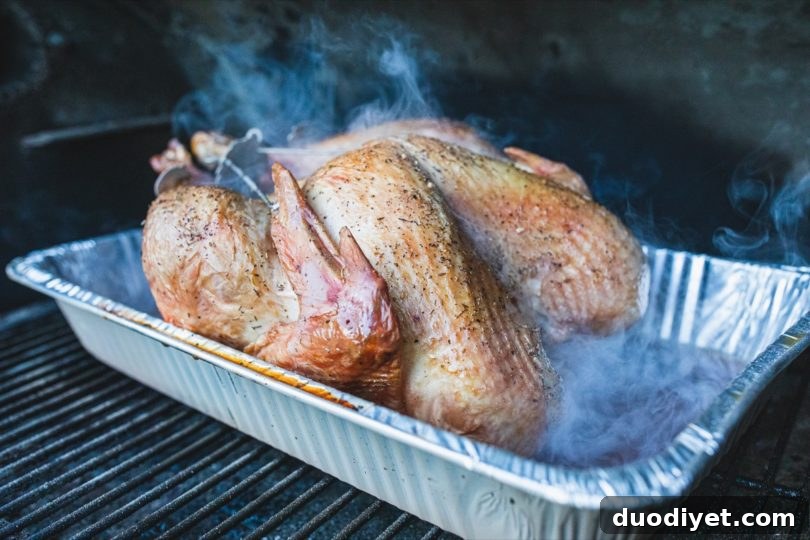
- Start low, uncovered: Preheat the Traeger to 250°F and smoke the turkey uncovered for 2 hours.
- Increase heat and cover: After 2 hours, raise the temp to 325°F and cover the bird.
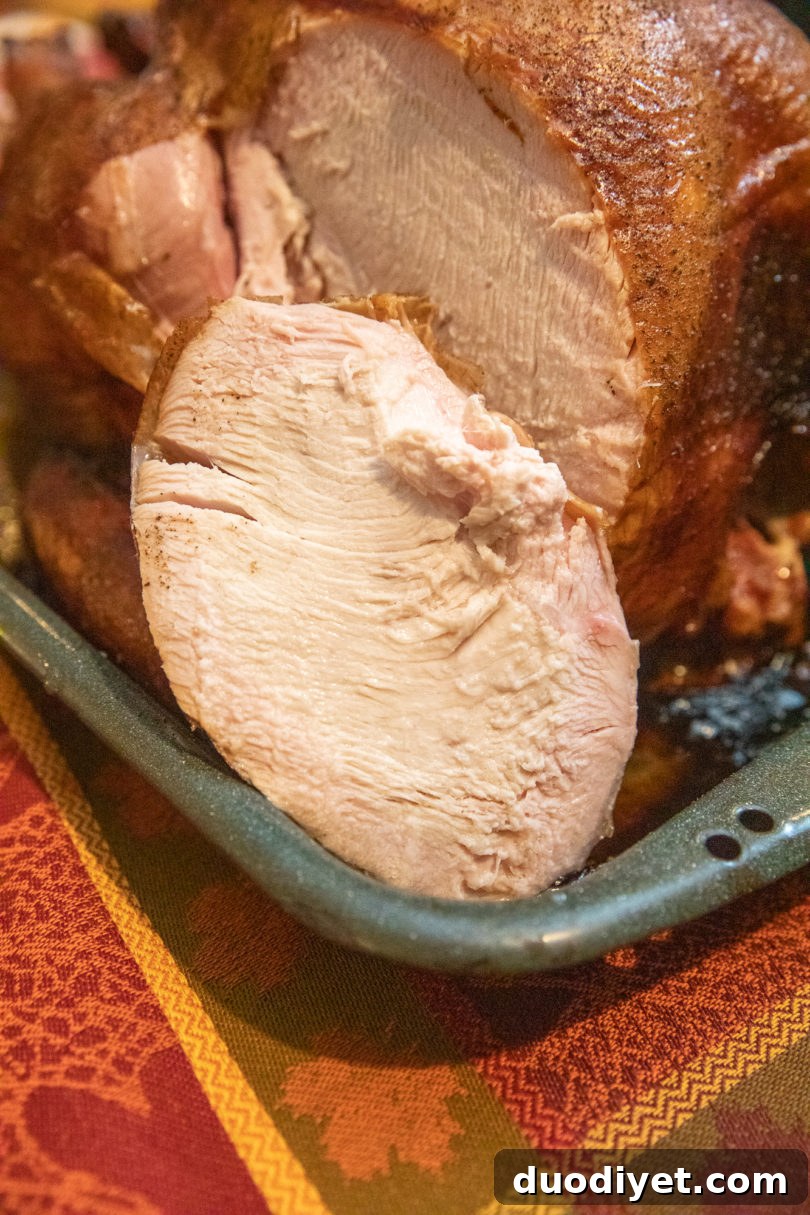
- Finish to temperature: Roast until the internal temperature reaches 165°F in the thickest part of the breast.
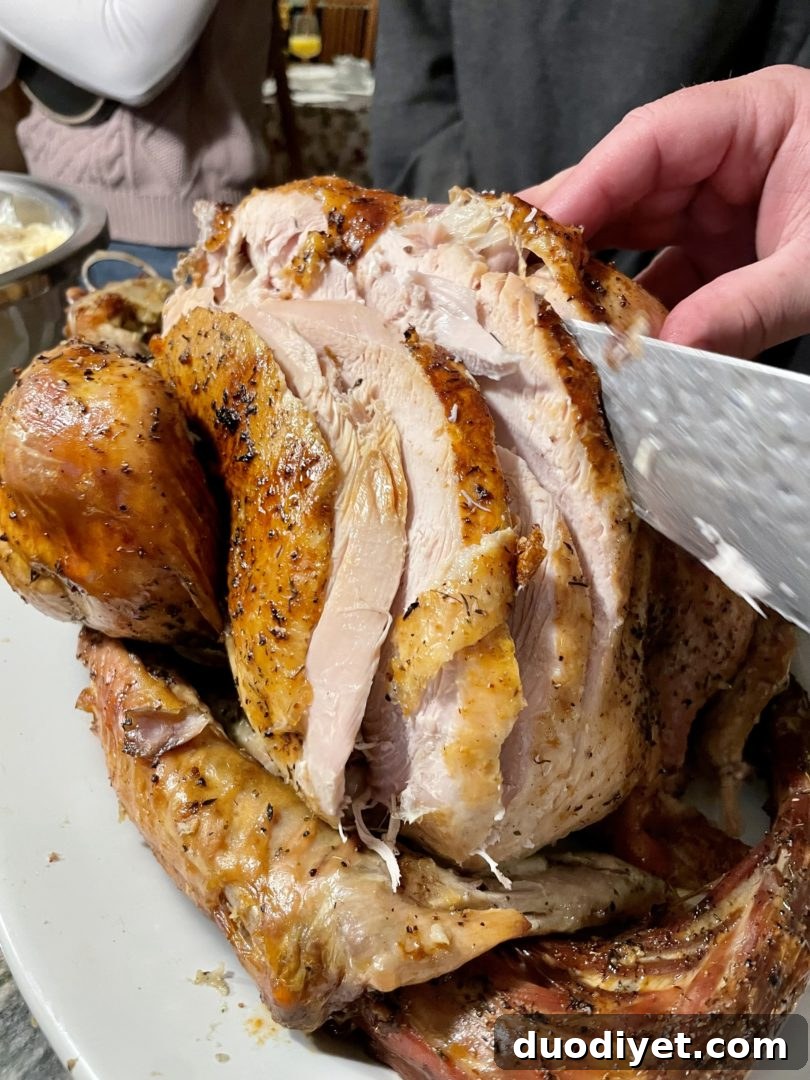
- Rest and carve: Let the turkey rest, then carve and use the drippings to make gravy.
Best Wood Pellet Flavors for Turkey
Fruit woods like apple and cherry are excellent for turkey — they add a mild, slightly sweet smoke that complements poultry seasoning. Traeger’s Gourmet Blend (hickory, maple, cherry) gives a bit more depth. Stronger woods like straight hickory or mesquite can overwhelm a mild bird, so reserve those for beef or pork unless you want a bolder smoke profile.
Should You Brine Your Turkey?
Brining (dry or wet) can enhance juiciness, but it’s not required. This recipe is written for an unbrined turkey and still produces great results. If you do brine, factor in extra time and follow a reliable brine recipe. Regardless, let the bird sit uncovered in the fridge for at least 24 hours before cooking — this helps dry the skin so it will crisp properly.
Troubleshooting: Common Turkey Problems
Dry meat: Usually a temperature issue. Cook to 165°F internal in the thickest part of the breast and avoid overcooking. Let the bird sit at near-room temperature briefly before cooking so it cooks more evenly.
Uneven cooking: Ensure the turkey has airflow around it and sits on a rack. If your grill has hot spots, rotate the pan halfway through cooking.
Rubbery or pale skin: Dry the skin thoroughly and give it an uncovered fridge rest for 24 hours. Cooking uncovered initially (as directed) helps the skin start to dry and brown.
Turkey Stock and Gravy from the Drippings
Save the pan drippings. Strain the liquid and skim the fat, then use the flavorful juices as the base for gravy by whisking them into a roux of butter and flour. Simmer the leftover carcass with water, onion, carrot, and celery for a few hours to make a smoky turkey stock you can use for soups and more gravy.
Tips for a Delicious Turkey
Use a Good Thermometer
Always cook to temperature, not time. An instant-read thermometer (or a reliable wireless probe) is essential so you don’t overcook the breast while waiting for the thighs to reach temperature.
Don’t Skimp on Seasoning
Generously season the turkey and rub some under the skin for deeper flavor.
Trussing
Trussing helps the turkey cook evenly and makes carving easier. Tools like a Turbo Trusser simplify the process if you prefer a gadget.
For faster, crispier skin with even cooking, consider spatchcocking the bird. A spatchcocked turkey lays flat and reduces overall cooking time.
If You’re Stuffing the Turkey
Stuffing inside the cavity carries food safety risks. If you choose to stuff, don’t pack it tightly and be sure both the stuffing and turkey reach safe temperatures. A safer alternative is to cook the stuffing separately in a covered dish or cook it loosely in cheesecloth inside the cavity for most of the cook, then finish it in a casserole for the last hour to develop color and texture.
Thawing Timeline
Plan on about 24 hours of refrigerated thawing for every 4–5 pounds. For example, a 12-pound bird needs roughly three days in the fridge to thaw safely. Don’t thaw on the counter. Remember the extra 24-hour uncovered fridge rest before cooking.
Can You Smoke Two Turkeys?
Yes. Two smaller birds often cook more evenly than one giant bird. Your grill will work harder to maintain temperature with more mass on the grates, so allow extra time and monitor internal temps closely.
Make a Spare Bird for Leftovers
If you want abundant leftovers, smoke an extra bird the day before. Use the carcass to make homemade stock for gravy on the big day — it’s a time-saver and yields better flavor than boxed stock.
How to Reheat Leftover Smoked Turkey
Reheat low and slow: cover sliced turkey and warm in a 300°F oven with a splash of stock or broth, just until heated through. Avoid the microwave when possible. Reheating in reserved drippings or gravy keeps the meat moist.
Serve This With
- Traeger Thanksgiving Dressing or your favorite stuffing
- Traeger Garlic Mashed Potatoes
- Smoked sweet potatoes or roasted vegetables
Pair with gravy made from the drippings and a fresh green bean casserole or a bright cranberry beverage to balance the smoky richness.
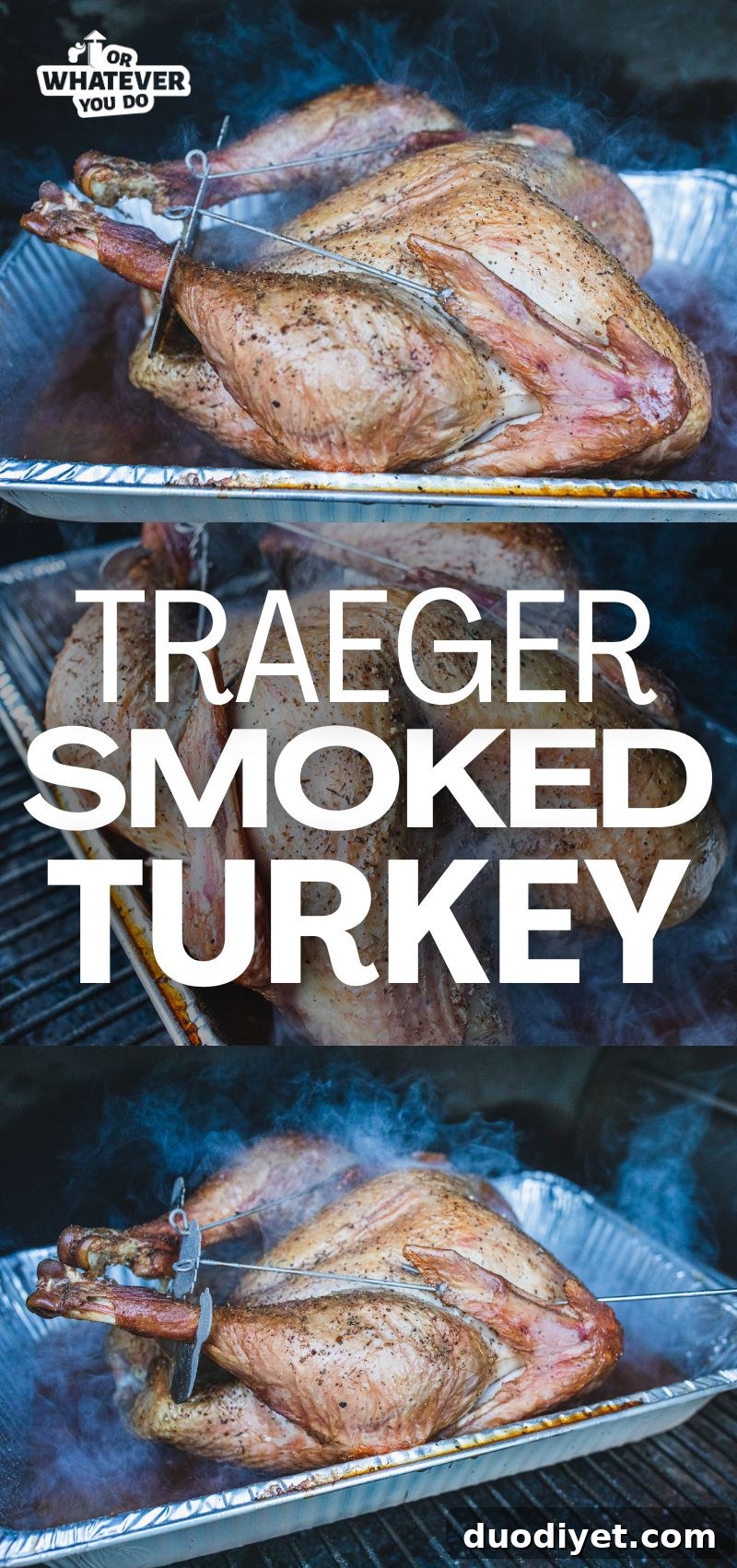
Traeger Smoked Turkey
A moist, tender turkey with subtle smoke and perfectly rendered skin. Easy to scale and ideal for holiday dinners.
Ingredients
- 1 turkey, 10–13 pounds, thawed, rinsed, and patted dry
- ½ cup olive oil
- 2 teaspoons ground poultry seasoning
- 1 tablespoon kosher salt
- 2 teaspoons Traeger Chicken Rub (or favorite poultry rub)
Instructions
- Preheat your Traeger or pellet grill according to the manufacturer’s instructions.
- Mix the olive oil with the poultry seasoning, kosher salt, and chicken rub. Rub the mixture all over the turkey, including a bit under the skin where possible.
- Place the turkey breast-side up on a rack inside a roasting pan so air can circulate and to collect drippings.
- Set the grill to 250°F. Place the turkey on the grill, uncovered, and smoke for 2 hours without opening the lid.
- After 2 hours, increase the grill temperature to 325°F and cover the turkey. Continue roasting until the thickest part of the breast reaches 165°F. Depending on bird size, this can take another 2–4 hours.
- Remove the turkey from the grill and let it rest for at least 20–30 minutes before carving. Reserve and strain the pan drippings for gravy.
Notes
If you stuff the turkey, do not pack the cavity tightly and check the stuffing temperature separately; it must reach a safe internal temperature. For stuffing flavor without safety concerns, cook stuffing in a cheesecloth pouch inside the cavity and finish it in a separate baking dish.
Nutrition Information (per serving)
Calories: 418 • Saturated Fat: 4g • Cholesterol: 193mg • Sodium: 591mg • Protein: 58g