
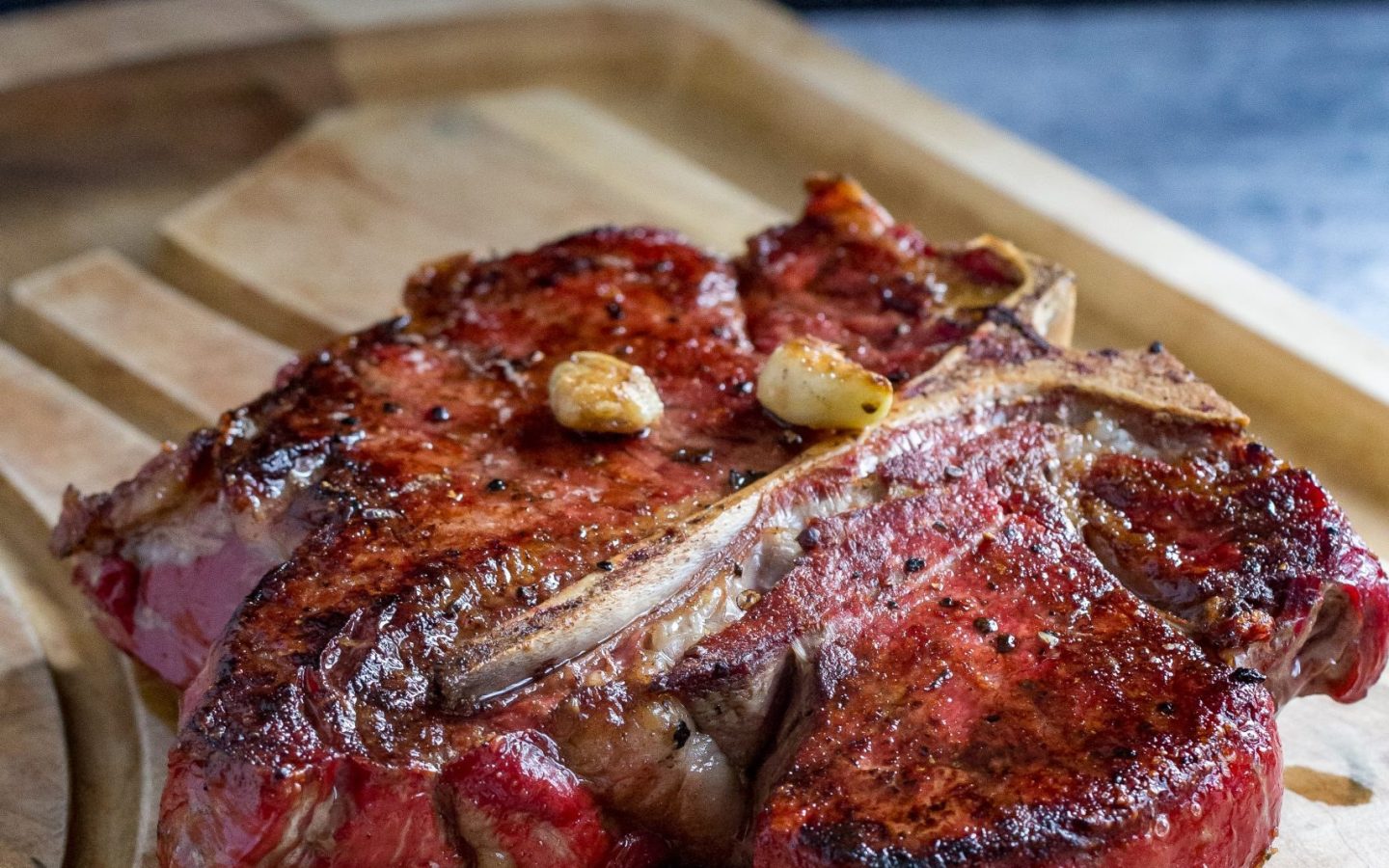
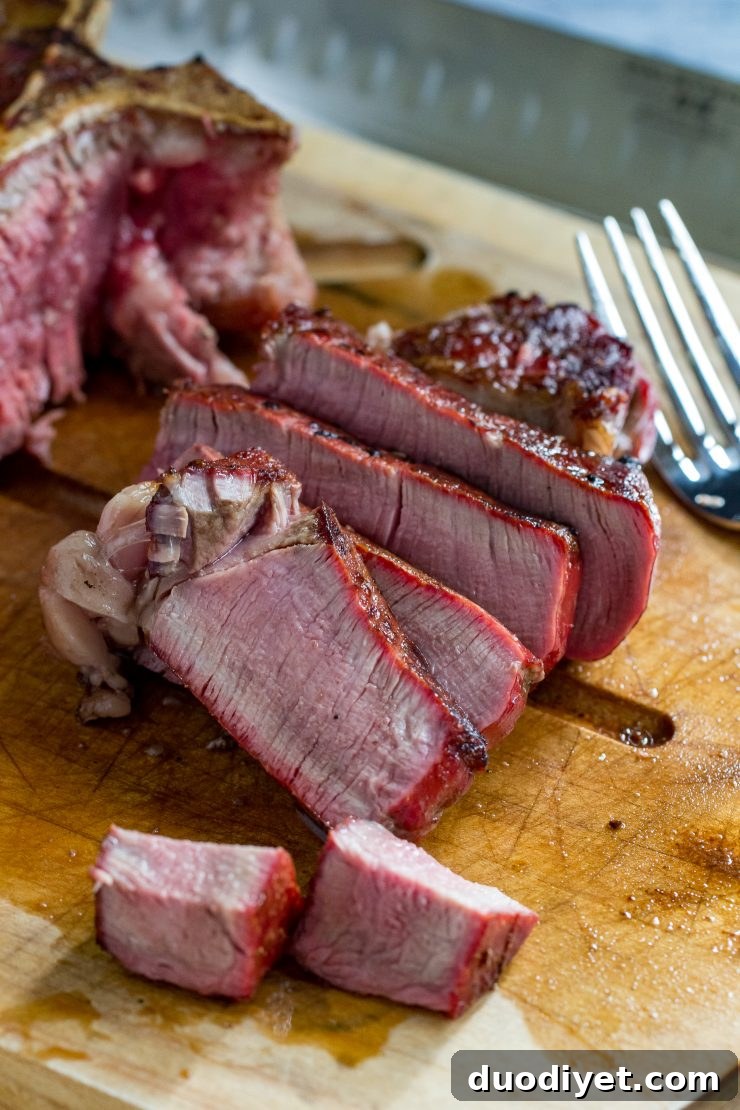
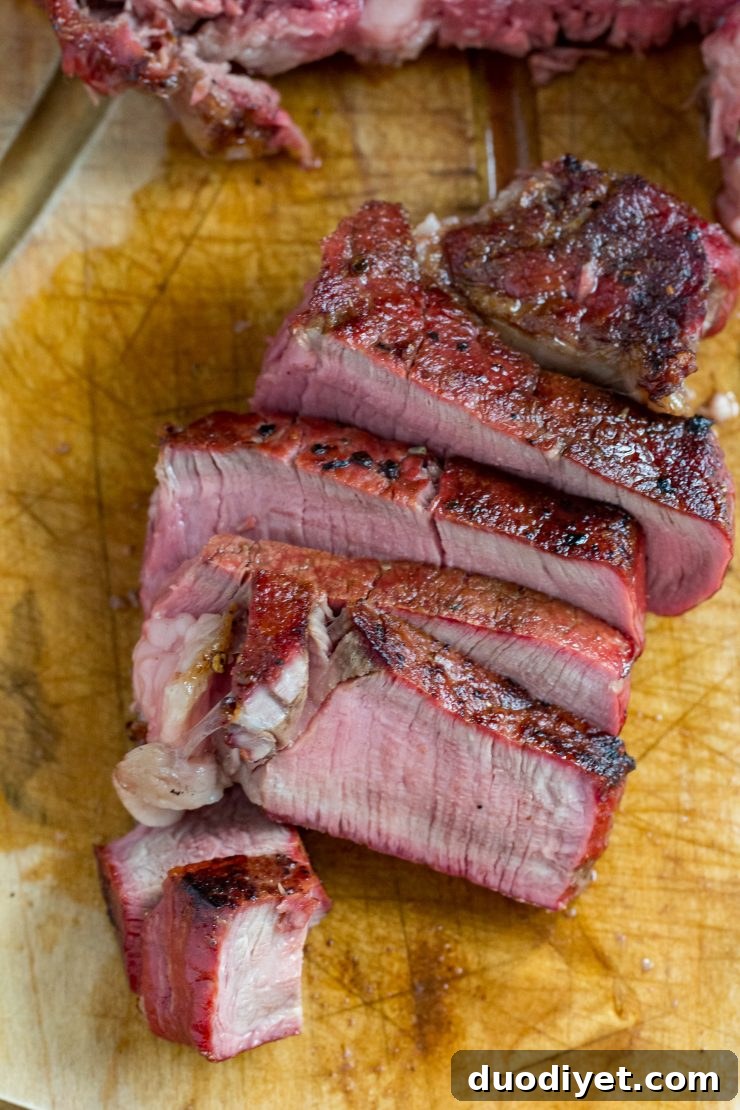
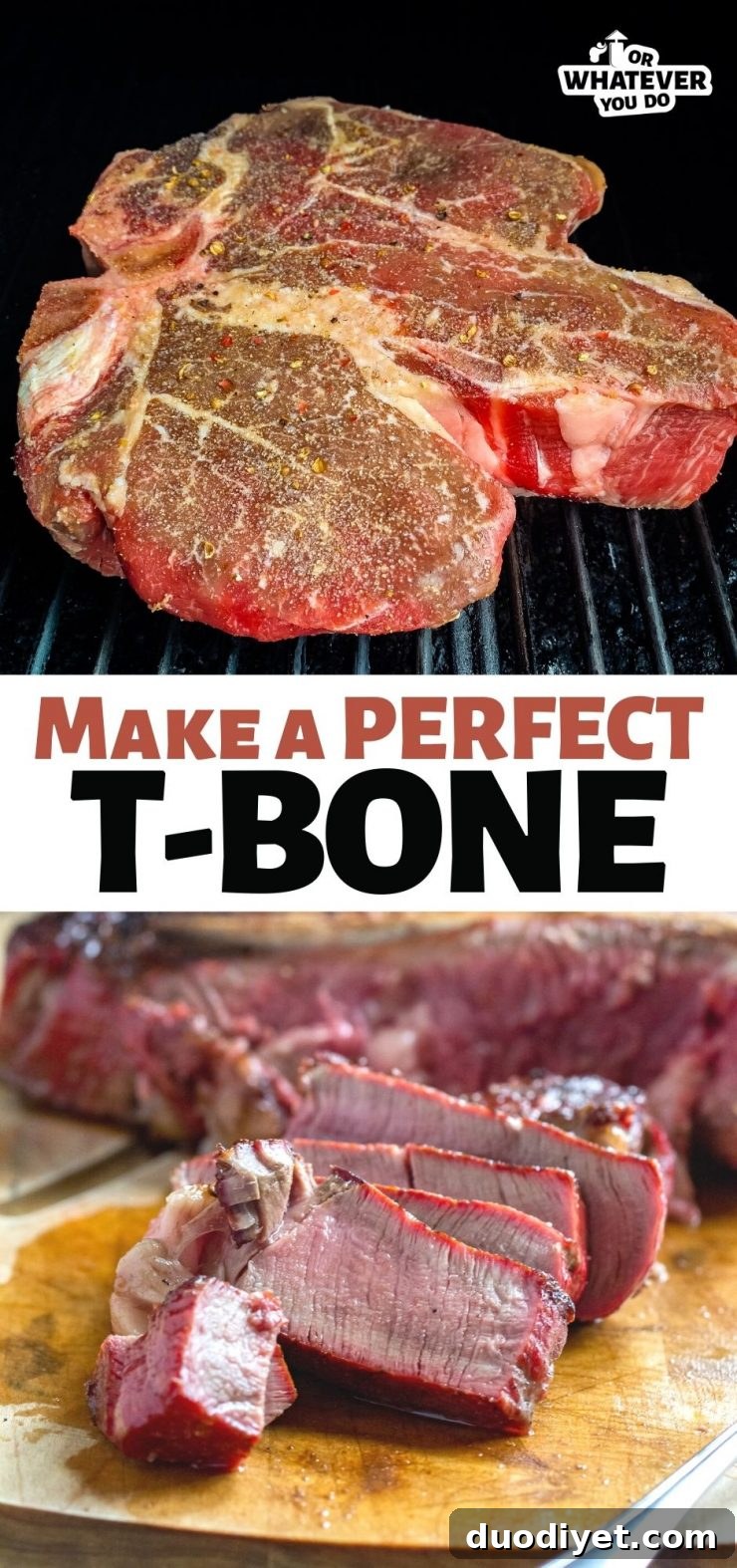
This reverse-seared T-bone steak is an impressive, 2-inch-thick cut smoked low and slow until it reaches about 115°F, then finished with an intense sear on a screaming-hot griddle or cast-iron to form a deeply caramelized crust and a tender medium-rare 125°F center. After a short rest the results are juicy, evenly cooked, and close to perfect.
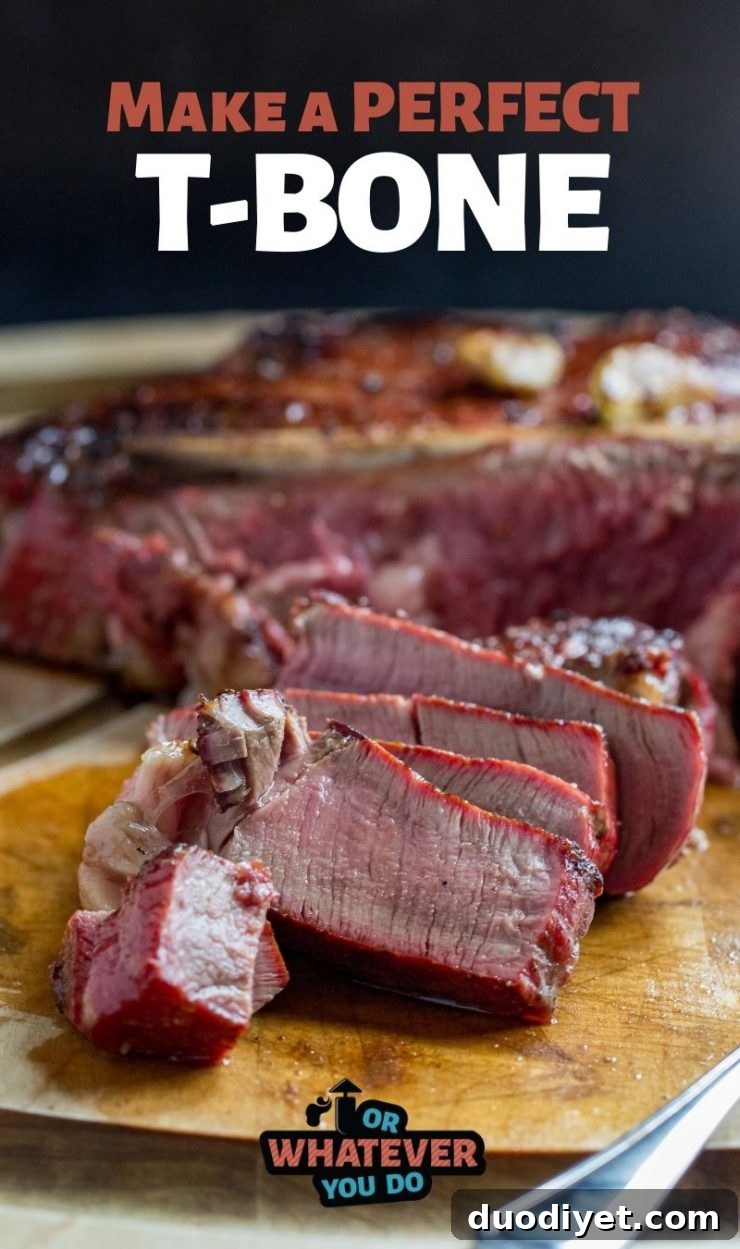
Traeger Reverse-Seared T-Bone Steak
I have a soft spot for great steaks — New York strip, ribeye, filet mignon, picanha, prime rib, flank, flat iron, tenderloin, tri-tip, hanger, tomahawk, sirloin cap — each cut brings something different to the table. The T-bone is special because it combines two classic portions: the flavorful New York strip on one side of the bone and the tenderloin (filet) on the other. When cooked well, it delivers both richness and tenderness in a single steak.
For this recipe I use the reverse-sear technique: cook low and slow to the target internal temperature, then finish over very high heat to build an appealing crust while keeping the interior evenly cooked. This method is forgiving and highlights the natural beef flavor, especially on a thick T-bone.
More Easy Traeger Recipes available on this site.
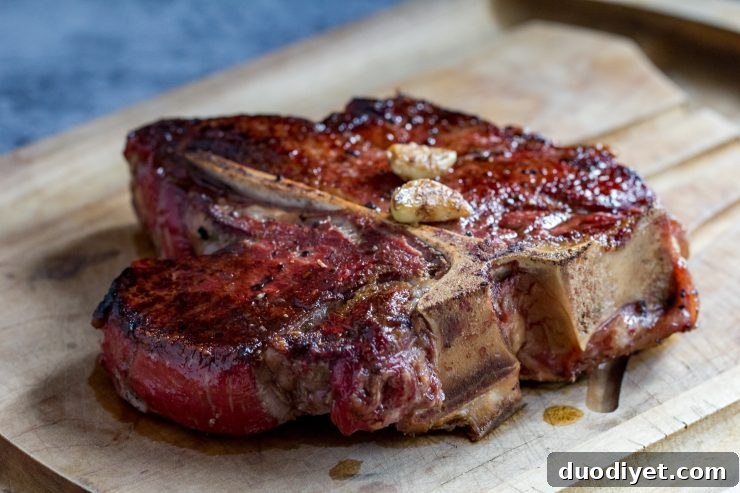
Is a T-bone a good steak?
Yes. The T-bone regularly ranks among the most popular steak cuts because it combines two desirable textures and flavors: the robust, beefy strip and the silky, tender filet. It grills beautifully and makes a dramatic presentation.
One caveat: T-bones are best enjoyed at rare to medium temperatures. If you prefer steaks well-done, the meat near the bone will lag in temperature and the outer edges can become overcooked before the center reaches the doneness you want.
If you like a more well-done steak, consider a different cut or a cooking method that addresses thickness and bone conduction.
More Traeger beef recipes and grilling resources on this site.
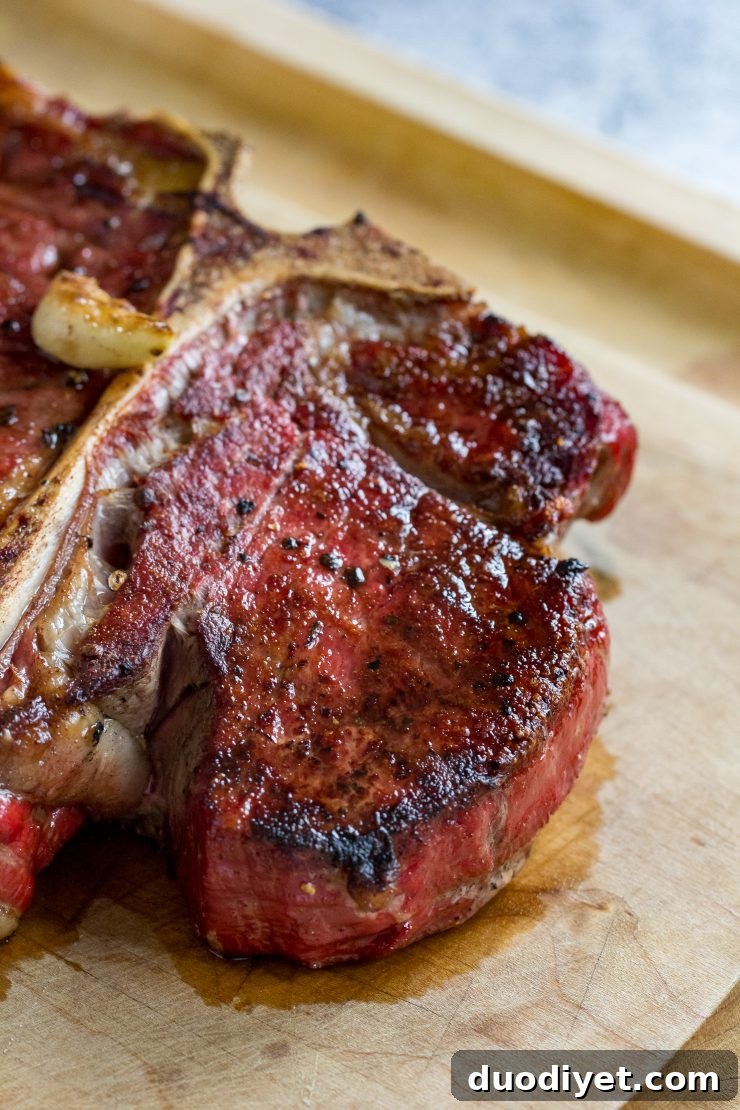
T-bone versus Ribeye
It’s a close contest. Ribeye is often a top pick for its marbling and ease of carving, while the T-bone offers variety in a single steak: a lean, tender filet and a meatier strip. If you don’t mind a bone and enjoy two textures, choose the T-bone; if you prefer extra marbling and ease of slicing, reach for a ribeye.
How do you grill a perfect T-bone steak?
Grilling is ideal for T-bone steaks. The reverse-sear method used here involves: smoking or cooking the steak at low heat until the internal temperature approaches your target (the “pull” temperature), then finishing with a very hot sear on a griddle or cast iron to achieve a flavorful crust without overcooking the interior.
You can also use traditional direct high-heat grilling, but for very thick T-bones the reverse sear gives more consistent results and better control over doneness.
Follow the recipe steps below for a reliable reverse sear.
How long should you cook a T-bone?
Cooking time varies with steak thickness, initial temperature, and the cook method. Rather than timing, grill to temperature. A quick-read meat thermometer is essential to hit the doneness you want. For reverse sear, smoke or grill low until reaching the pull temperature listed in the chart below, then rest and finish with a high-heat sear.
Common target internal temperatures (pull and final) are summarized in the chart below to guide your timing and thermometer use.
| STEAK TEMPERATURES | PULL | FINAL |
| RARE | 115° | 120° |
| MID-RARE | 125° | 130° |
| MEDIUM | 130° | 135° |
| MEDIUM-WELL | 135° | 140° |
| WELL | 140° | 145° |
Pair this steak with your favorite side dishes for a classic steakhouse meal.
Should you marinate a T-bone?
You can marinate a T-bone if you want to add a particular flavor profile, but because the cut itself has strong beef flavor and great texture, a simple seasoning of coarse salt and freshly ground pepper is often all that’s needed. If you do choose to marinate, keep the ingredients balanced so they don’t mask the natural meat flavor.
Serve with butter, compound butter, or a simple finishing salt to enhance flavor.
Other cooking methods for a T-bone
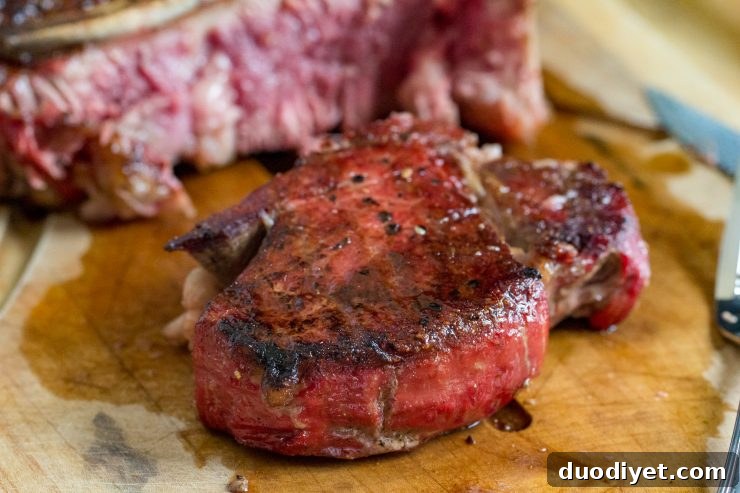
If you don’t have a pellet grill or outdoor grill, you can reverse sear in the oven and finish on the stovetop in a hot cast-iron skillet. Alternatively, cook entirely in a preheated cast-iron skillet over high heat for a shorter direct-sear approach, flipping as needed to avoid burning while achieving a crust.
24 Incredible Traeger Recipes and grilling ideas are available on this site.
What to serve with a grilled T-bone steak
Classic accompaniments include smoked or baked potatoes, smashed potatoes, garlic mashed potatoes, or layered potato stacks with a cream or Parmesan sauce. For additional comfort, mac and cheese or soft milk rolls complement the meat. To balance the meal, serve a crisp Caesar salad with homemade dressing or a bright Greek salad with vinaigrette.
Pin For Later
Reverse Seared T-Bone Steak
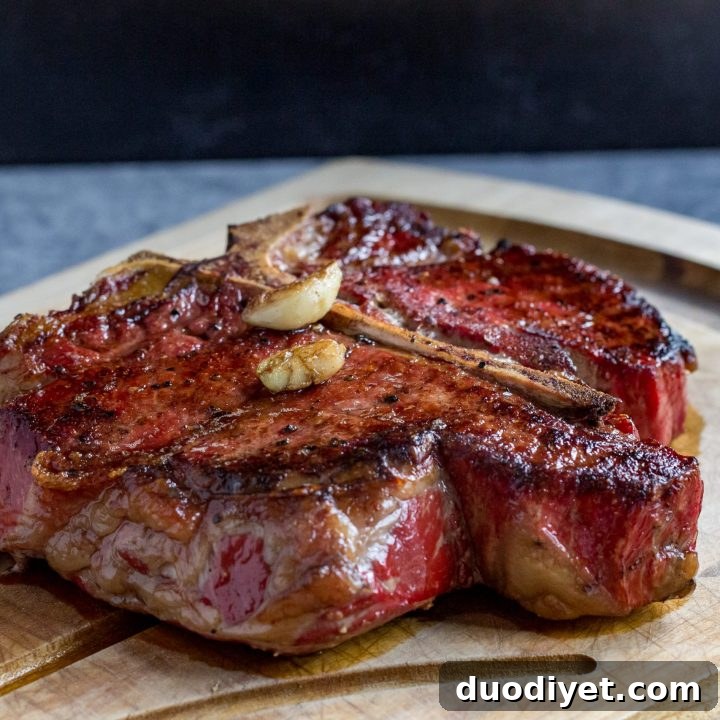
A large 2-inch T-bone smoked low, then seared over high heat for a restaurant-quality steak with a rich crust and a juicy interior.
Ingredients
- 2 pound T-bone steak (about 2-inch thick)
- Coarse salt and freshly ground black pepper
Instructions
- Preheat your pellet grill, smoker, or oven to 200°F (93°C). Place the steak on the grill or in the oven and cook slowly until the internal temperature reaches about 115°F for a rare final result or 125°F for mid-rare pull.
- Remove the steak from low heat. Generously season both sides with coarse salt and freshly ground black pepper.
- Preheat a gas griddle, cast-iron skillet, or very hot grill to high. Add a small amount of high-heat oil if using a skillet or griddle.
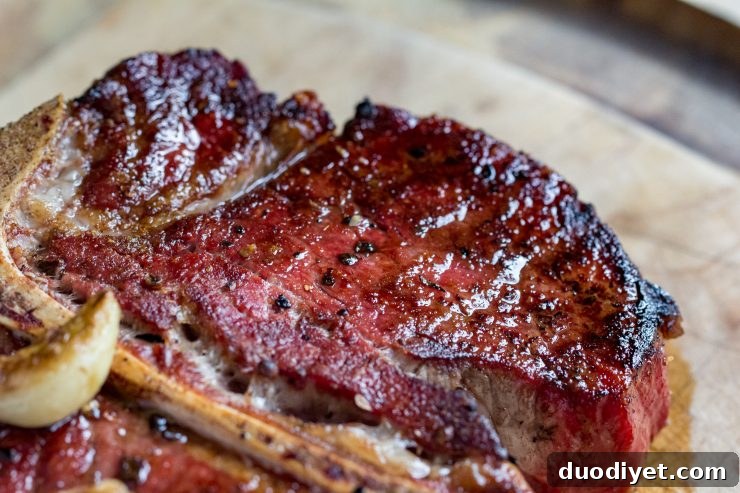
- Sear the steak for 1–2 minutes per side, or until a deep brown crust forms and the internal temperature reaches your desired final temperature (see temperature chart earlier).
- Remove from heat and let the steak rest, tented loosely with foil, for about 5 minutes to allow juices to redistribute. Slice and serve.
Recommended Tools & Equipment
- Thermometer (quick-read instant thermometer recommended)
- Cast-iron skillet or heavy-duty griddle
- High-heat oil for searing
- Pellet grill or smoker (for the reverse-sear method)
Nutrition Information (estimate):
Yield: 4 servings • Serving Size: 1
Amount per serving: Calories: 656 • Total Fat: 46g (Saturated: 19g) • Cholesterol: 188mg • Sodium: 214mg • Carbohydrates: 0g • Protein: 56g
Nutrition data provided here is only an estimate.