
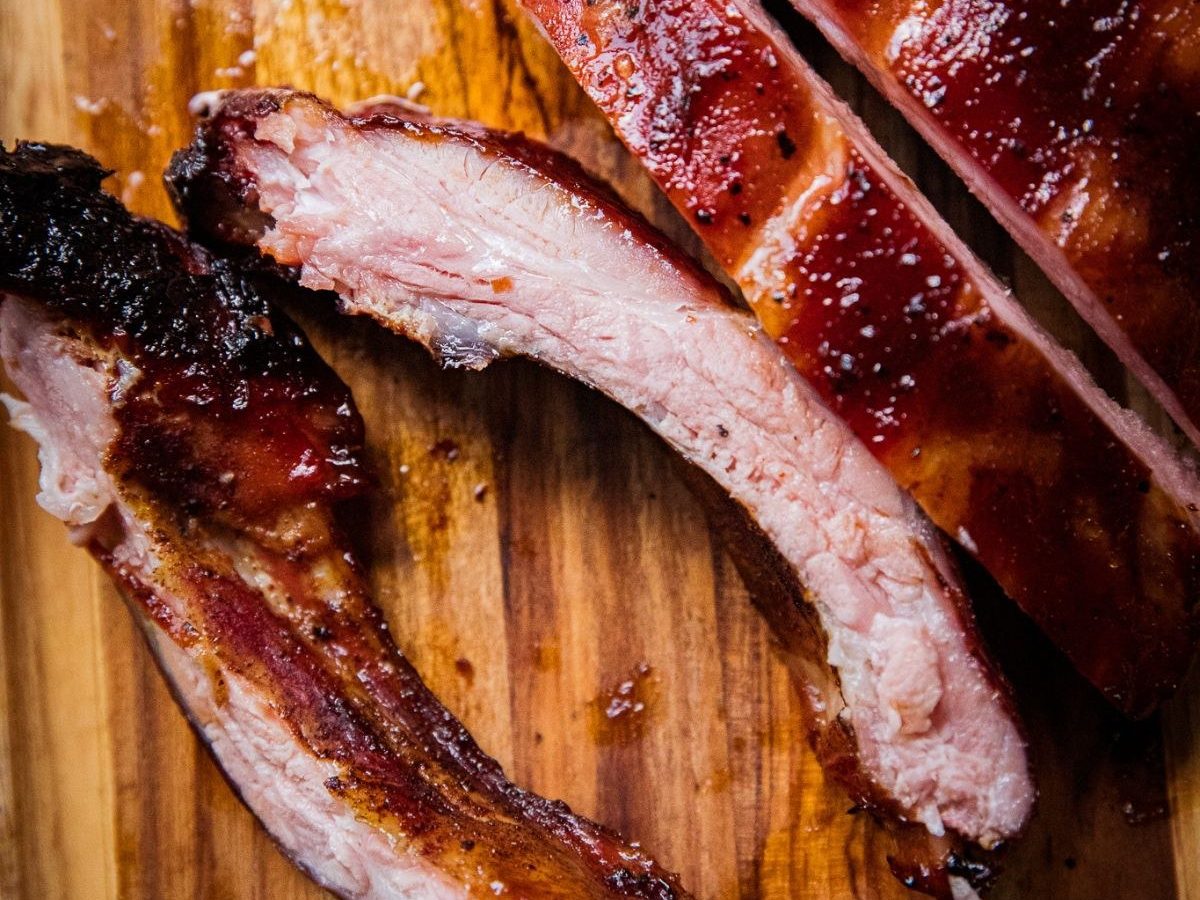
Traeger 3-2-1 Ribs are a hugely popular approach among pellet-grill enthusiasts. Below you’ll find a clear explanation of the method, tips to adjust tenderness and flavor to your taste, and everything you need to consistently produce great smoked ribs.
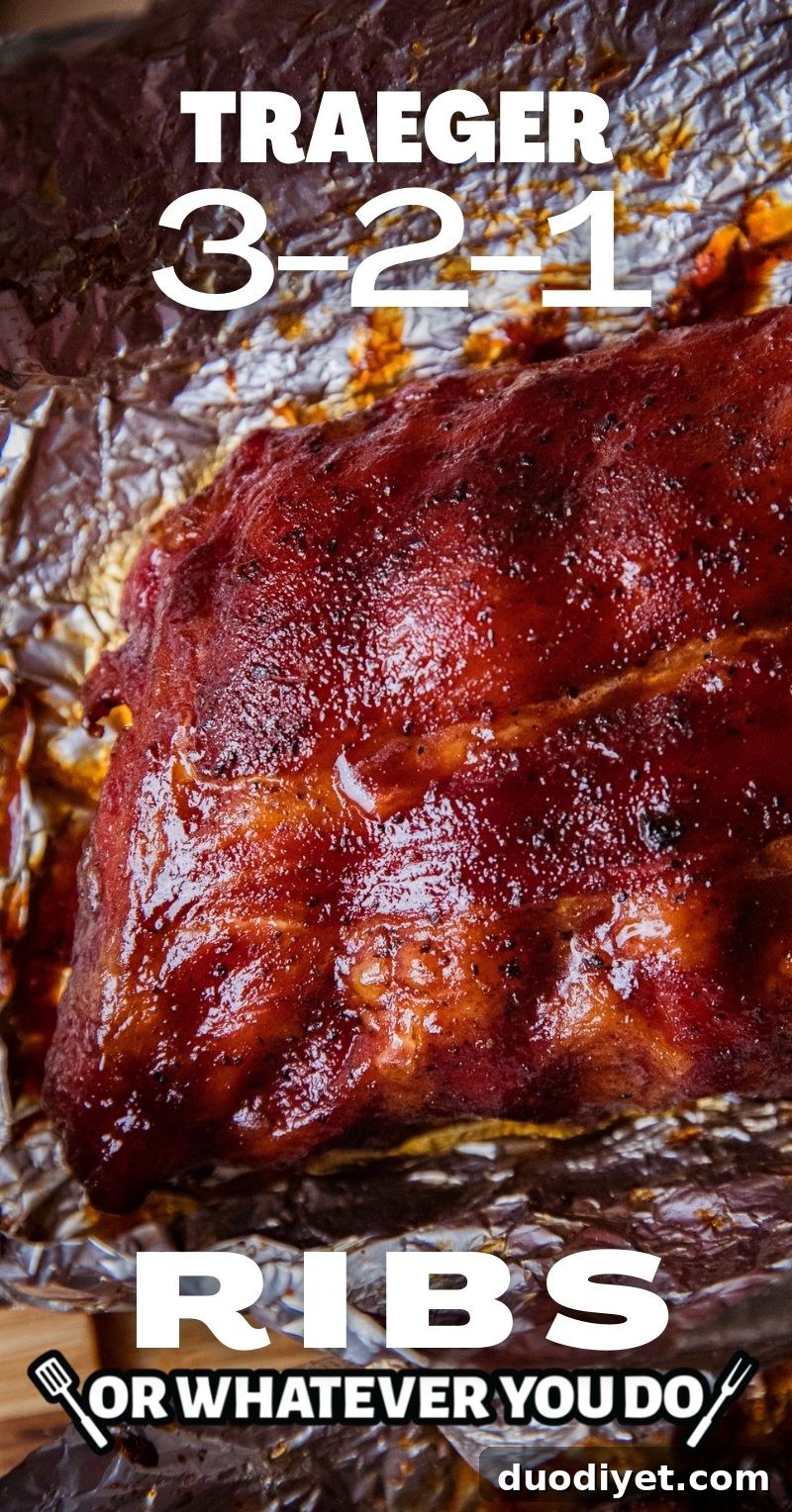
Traeger 3-2-1 Ribs
The 3-2-1 method is one of the best known frameworks for smoking pork ribs. It gives a reliable structure while remaining flexible: depending on timing, liquid and heat you can produce either fall-off-the-bone tenderness or ribs with a little bite left. Expect variation — the method is a guideline that you tune to your equipment and preferences.
Everyone has a preference for rib texture. Some like ribs that still pull away from the bone with a little resistance; others want them to collapse at a touch. The 3-2-1 approach lets you meet both preferences by ending the wrapped stage earlier or later as needed.
Pay attention to the meat, use temperature as your primary guide, and be willing to tweak the liquid and time. There is no single “magic” recipe for perfect ribs; great barbecue comes from understanding how your smoker behaves and adjusting as you go.
Why You’ll Love This
- Reliable Structure: The 3-2-1 timeline removes much of the guesswork of low-and-slow smoking.
- Customizable Tenderness: Change the wrap liquid and finishing temperature to get fall-off-the-bone ribs or a firmer bite.
- Feeds a Crowd: The method scales well—you can smoke multiple racks at once.
- Deep Smoke Flavor: Three hours of unwrapped smoking builds a strong smoky bark.
- Beginner Friendly: If you can follow times and temps, you can make great ribs.
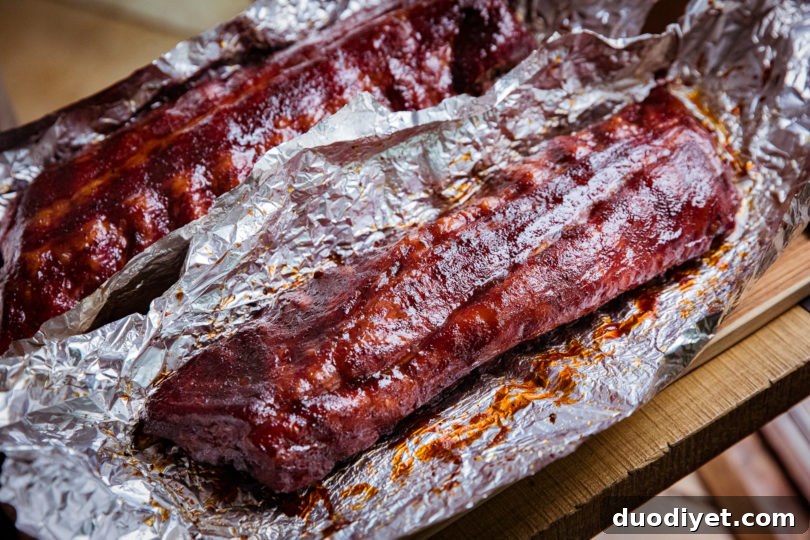
Recipe Shopping List
Here’s what you’ll need. Consult the recipe card below for exact amounts.
- Baby back ribs — remove the membrane from the bone side for best results.
- Mustard — yellow mustard is the classic binder for rubs; Dijon can work too.
- BBQ rub — use a favorite store-bought rub or a homemade rib rub.
- Butter — a few pats added before wrapping enrich the meat.
- Brown sugar — adds sweetness and helps the wrap stage caramelize.
- Liquid — hard apple cider, beer, apple juice or similar liquids work well inside the foil wrap.
- BBQ sauce — for glazing during the final unwrapped stage, optional but recommended.
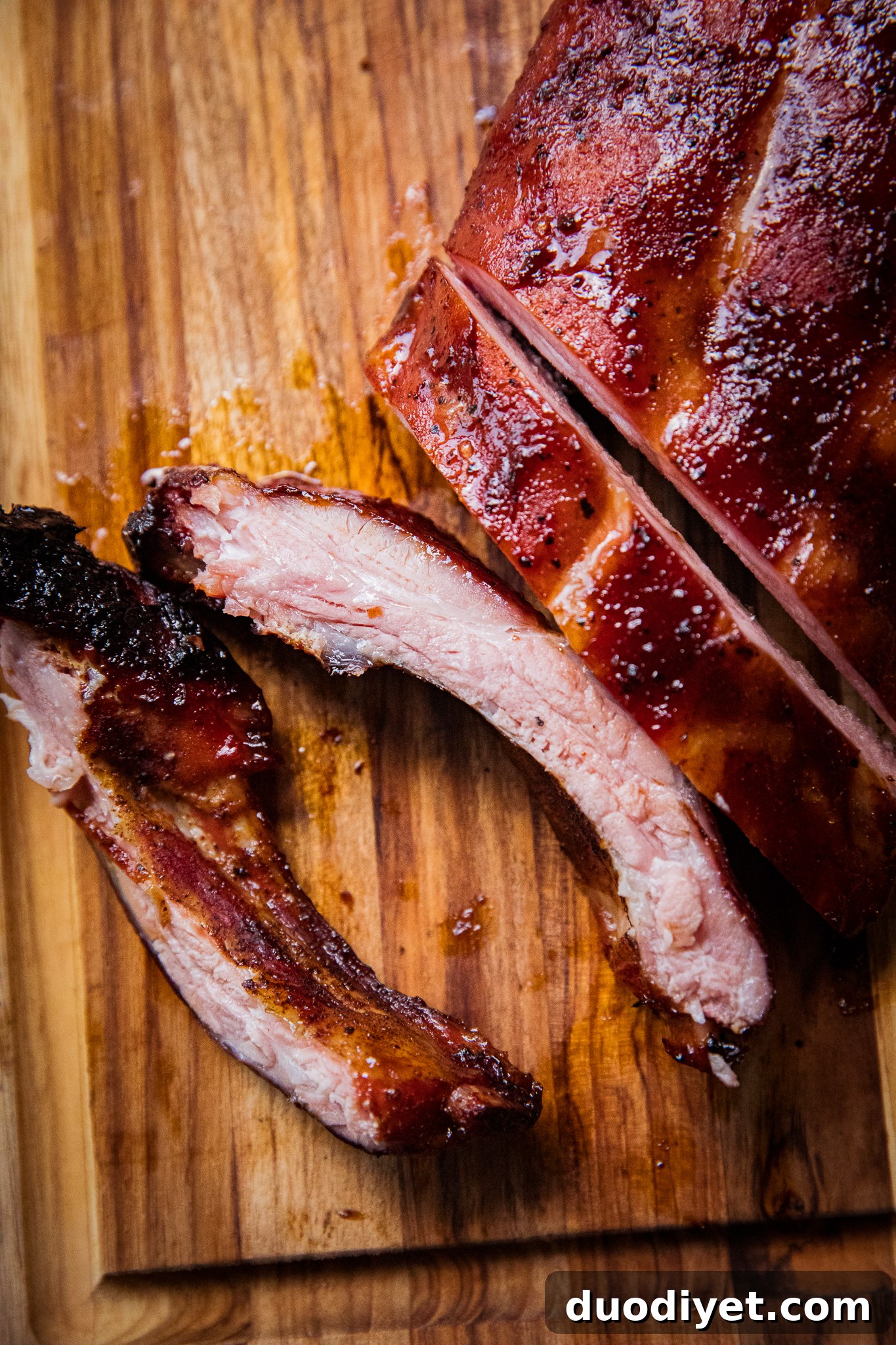
How to Make This Recipe — Overview
The following is an overview of the 3-2-1 approach. For best results, follow the full instructions and pay attention to internal temperatures.
- Preheat and prep: Preheat your pellet grill or smoker to 180°F. Remove the membrane from the back of the ribs, rub a thin layer of mustard on both sides, then apply a generous coating of BBQ rub.
- Smoke: Smoke the ribs at 180°F, unwrapped, for 3 hours. This builds smoke flavor and bark. Aim for an internal temp around 160°F before wrapping.
- Wrap and cook: Increase the grill temperature to 225°F. Wrap each rack tightly in a double layer of heavy-duty foil. Add pats of butter, brown sugar and about 1/2 to 1 cup of liquid (hard cider, beer, or apple juice) inside each packet, seal well, and return to the grill for 2 hours. For a firmer bite, remove earlier; for fall-off-the-bone tenderness, aim for 205°F internal temp.
- Unwrap and finish: Unwrap the ribs, brush with barbecue sauce, and place back on the grill at 225°F for 30–60 minutes to set the glaze and firm the bark.
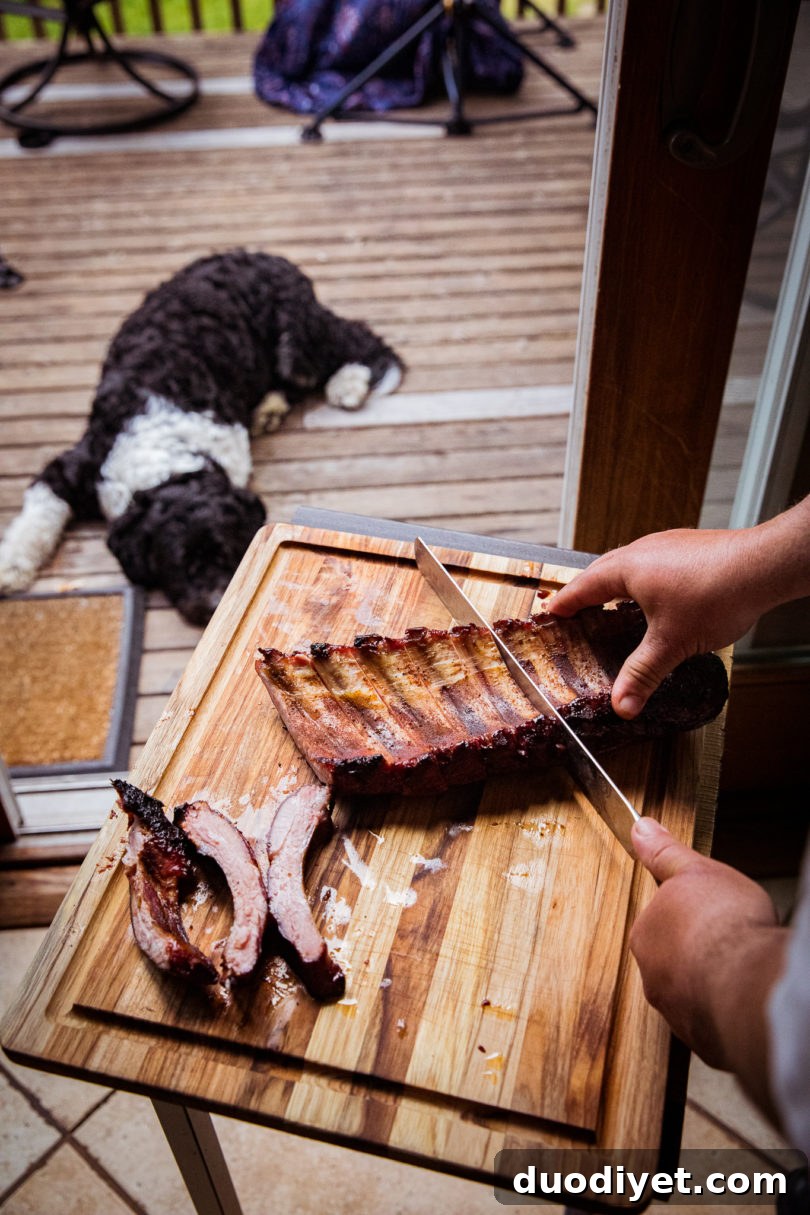
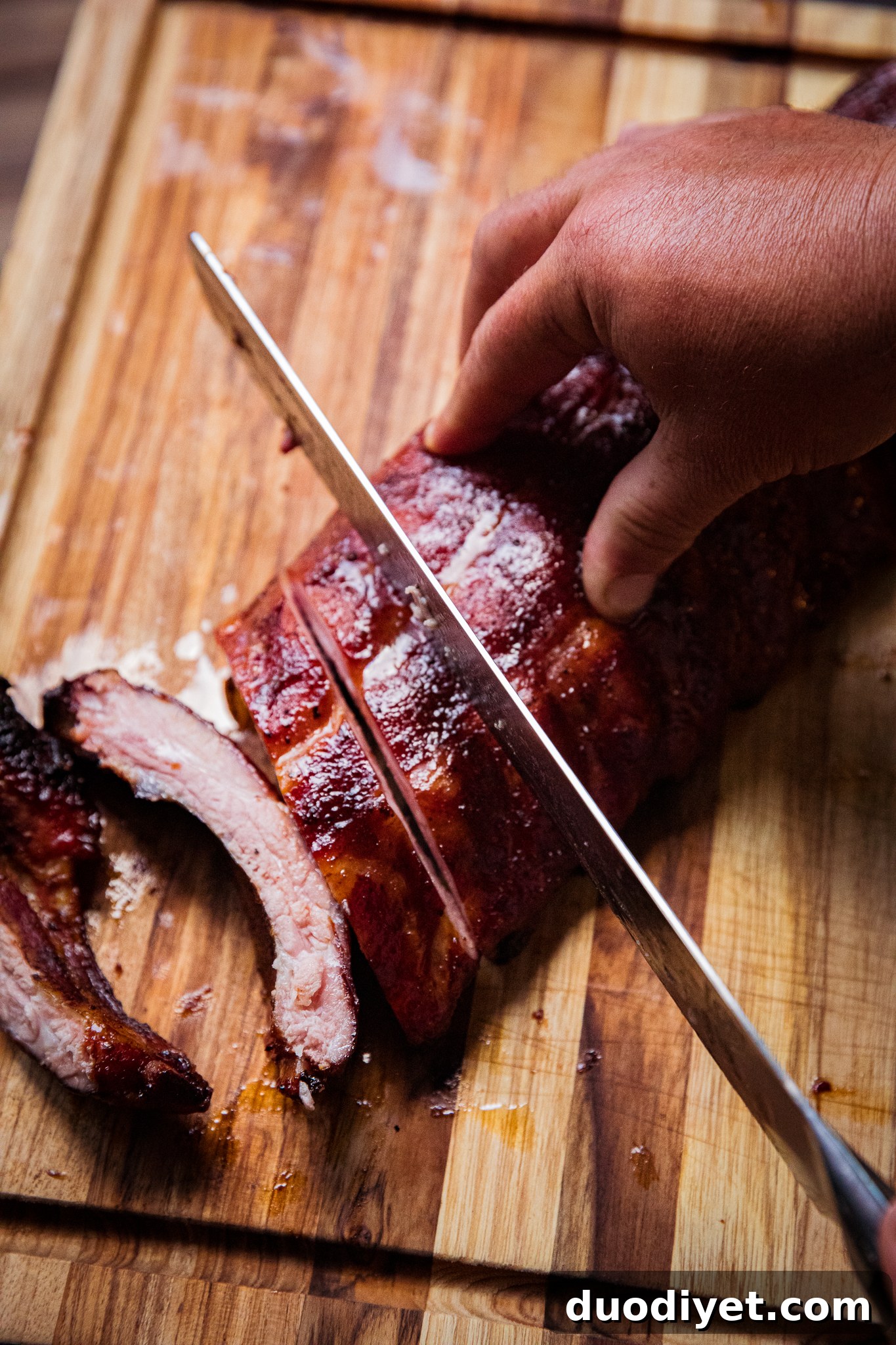
- Rest and serve: Let ribs rest briefly, then slice between the bones and serve with your favorite sides and sauce.
Recipe FAQ
I wrap leftovers tightly in foil or store them in an airtight container in the refrigerator. Properly wrapped ribs will keep for several days.
Reheating gently preserves texture. Sous vide is ideal if you have the gear. Otherwise, rewrap in foil with a splash of apple juice or beer and warm in a low oven (250–275°F) until heated through.
Yes. The 3-2-1 method adapts well to St. Louis-style ribs and can be used for beef short ribs with adjustments. Always track internal temperature rather than relying solely on time.
If you want more chew: use less liquid during the wrap stage so there is less steam, and pull the ribs at a lower final internal temperature (around 195°F rather than 205°F). Shortening the wrapped time by 30–60 minutes will also help maintain more texture.
Butcher paper can work similarly but is more breathable than foil; if using butcher paper, expect to potentially need more time to reach the same tenderness. Monitor internal temperature and tenderness, and add time if needed.
More Ideas for Ribs
- Smoked no-wrap ribs — for maximum smoke flavor and a firmer bite.
- Smoked beef short ribs — big, beefy plates for a special meal.
- Country-style pork ribs — meaty and flavorful, though not true ribs.
- Smoked St. Louis ribs — a budget-friendly and delicious cut.
- Flavor variations — try colas, cherry-based sauces, or Asian-inspired glazes for different profiles.
- Faster method — combine pressure cooking and smoking when time is limited.
Serve This With
Classic BBQ sides pair perfectly with smoked ribs:
- Creamy coleslaw
- Vinegar coleslaw
- Macaroni salad
- Potato salad
- Smoked baked beans
- Smoked mac and cheese
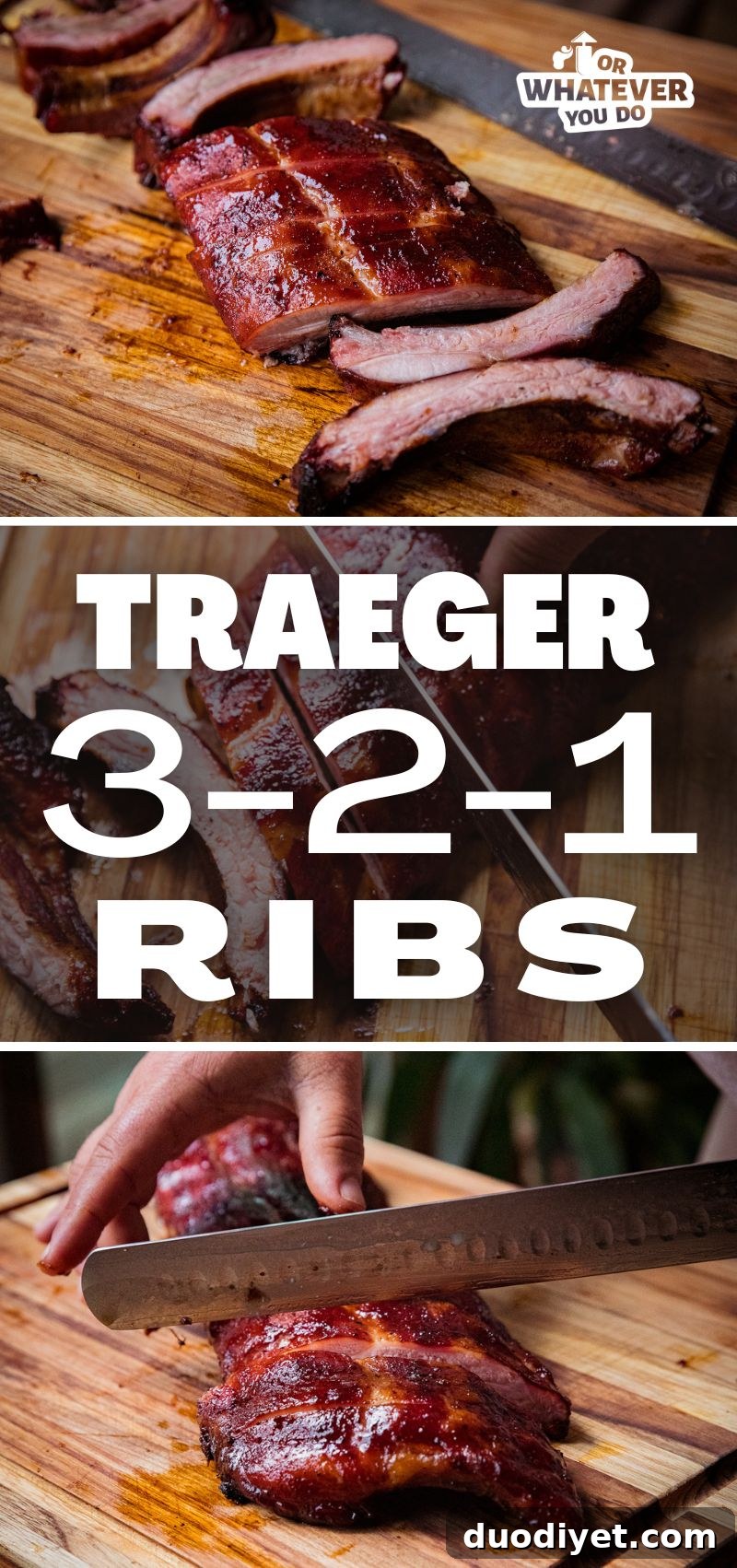
Traeger 3-2-1 Ribs
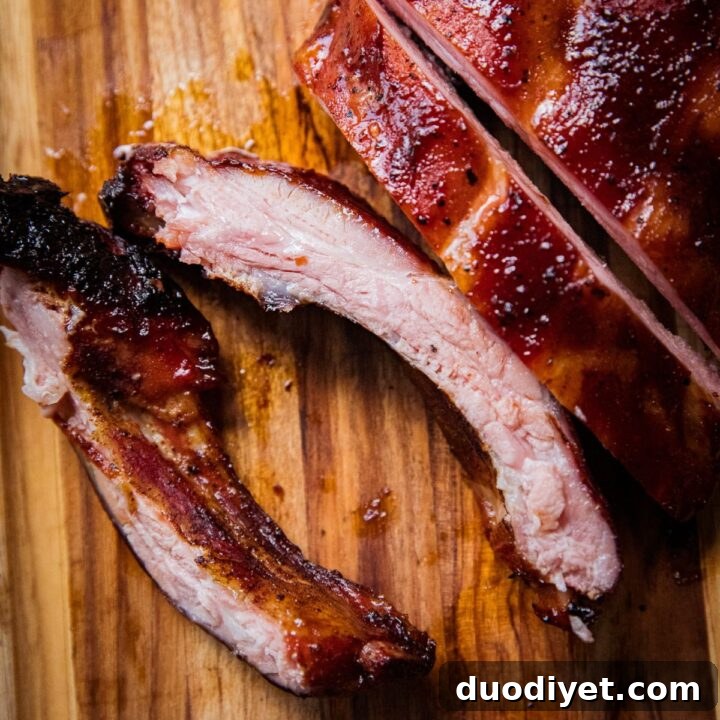
Delicious, tender Traeger-style 3-2-1 ribs with deep smoke flavor. Adjust the wrap time and liquid to dial in your preferred level of tenderness.
10 minutes
6 hours
6 hours 10 minutes
Ingredients
- 2 racks baby back ribs
- 4 tablespoons mustard
- 6 tablespoons BBQ rub
- 6 tablespoons butter
- 1 cup brown sugar
- 1 cup hard apple cider or beer (or apple juice)
- 2 cups barbecue sauce
Instructions
- Preheat smoker to 180°F. Remove the membrane from the ribs. Rub a thin layer of mustard on both sides, then coat with BBQ rub.
- Smoke ribs meat-side up for 3 hours at 180°F, until internal temperature reaches about 160°F.
- Double-wrap each rack in heavy-duty foil. Add half the brown sugar and butter, then pour in about half the cider or beer. Seal the packets tightly.
- Raise grill to 225°F and cook wrapped ribs for 2 hours, or until internal temp reaches ~195°F for some bite or ~205°F for very tender ribs.
- Carefully unwrap, brush with barbecue sauce, and return to the grill for 30–60 minutes to set the sauce and finish the bark.
Nutrition Information
Yield: 6
Calories: 487 (estimate)
Total Fat: 15g
Protein: 6g
Nutrition data is an estimate.