
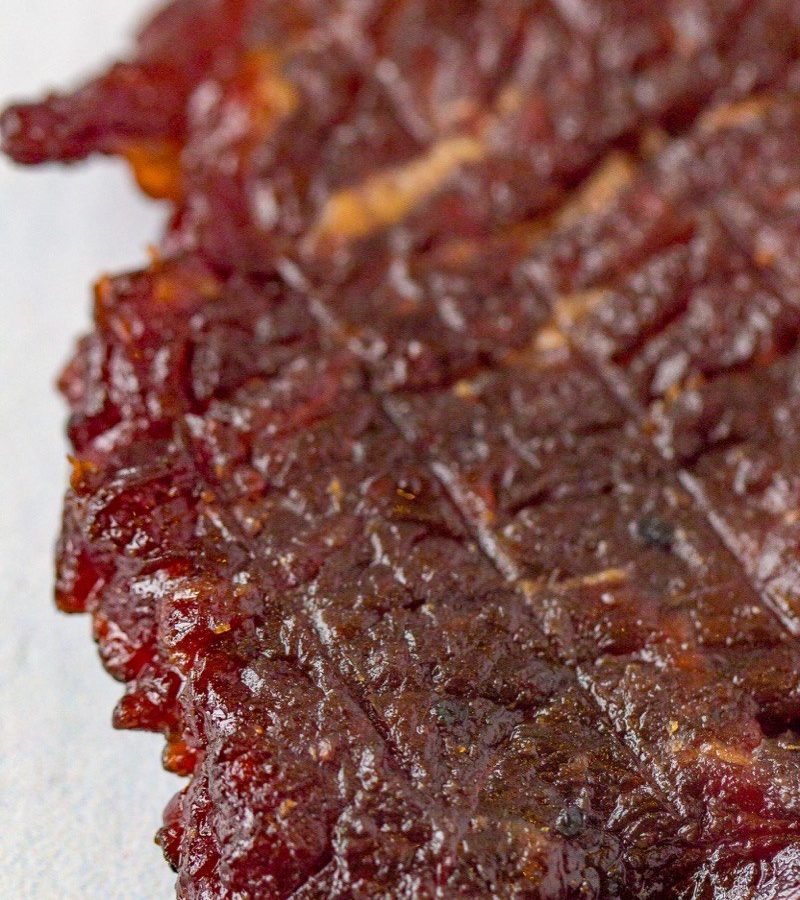
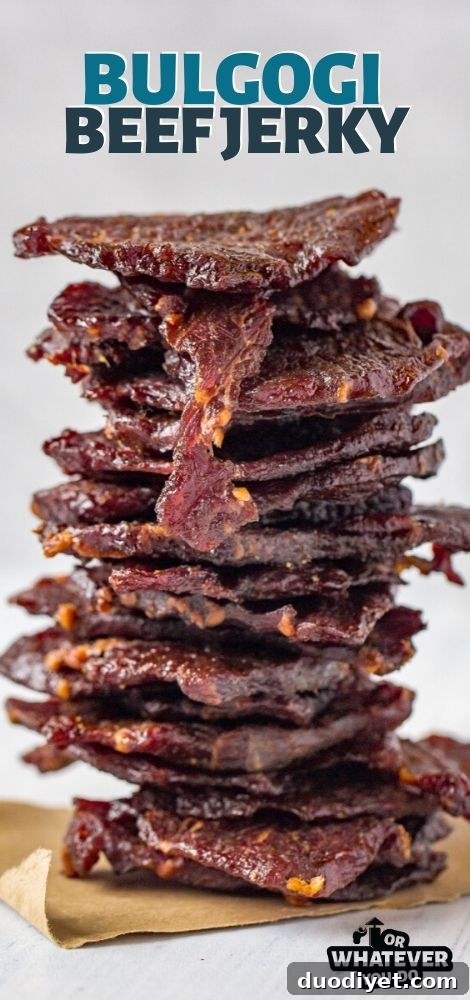
Bulgogi Beef Jerky takes the sweet-savory flavors of classic Korean beef bulgogi and turns them into chewy, smoky jerky. This version is marinated in a traditional bulgogi-style sauce, then smoked low and slow until it reaches the perfect jerky texture. It’s a favorite at home—sweet, savory, and deeply satisfying.
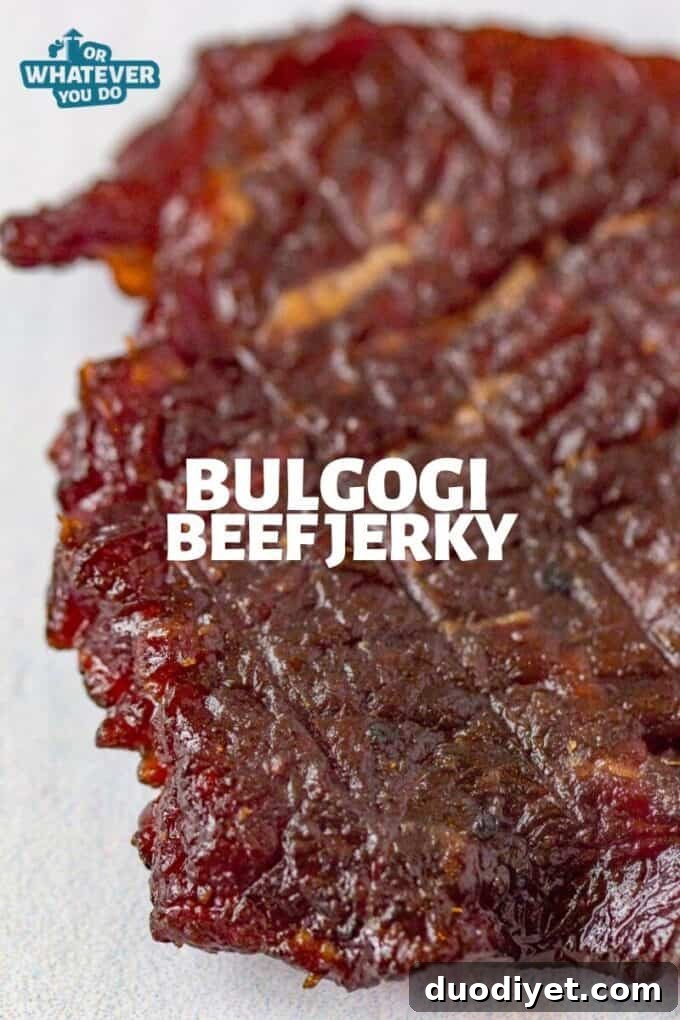
Smoked Bulgogi Beef Jerky
If you love traditional beef jerky, this bulgogi-inspired version offers a delicious twist. The marinade highlights garlic, soy, sesame, and the mild fruitiness of Asian pear (or Fuji apple), with optional gochujang for a gentle chile-fermented kick. After marinating, the meat is dried over low heat with wood smoke until it reaches that ideal balance of tender chew and dryness.
This recipe is based on a classic jerky technique: thinly sliced lean beef, a well-balanced marinade, thorough marination, and long, low-temperature smoking. The result is jerky with layers of flavor—sweet, umami, and aromatic sesame—without being cloying.
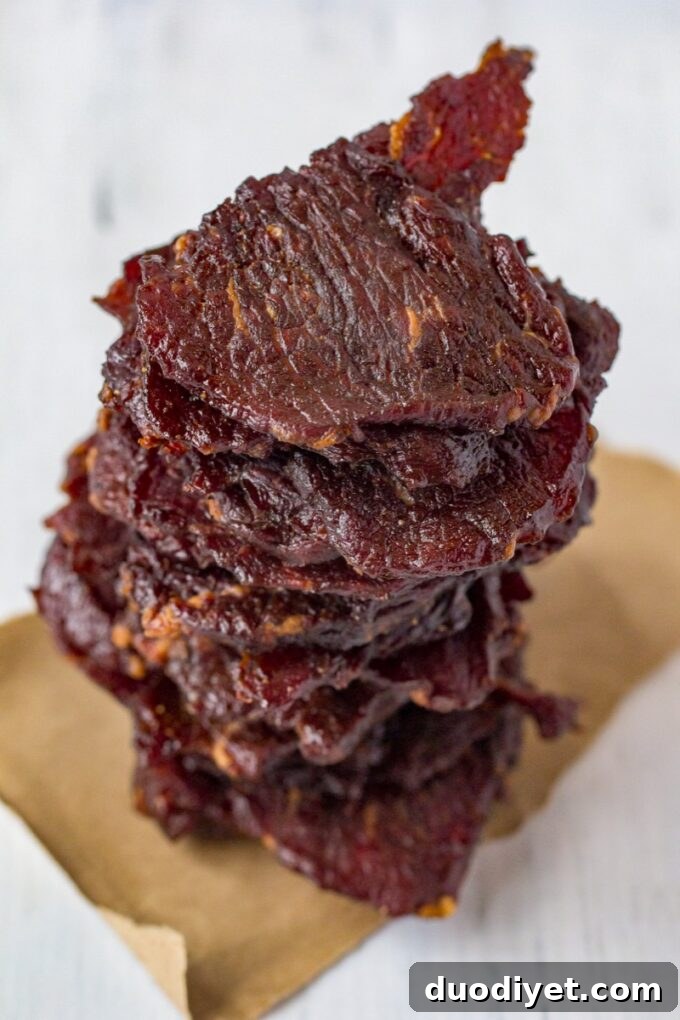
What kind of meat is best for bulgogi beef jerky?
Lean, firm cuts are ideal for jerky. Top round, bottom round, or eye of round work best because they slice thinly and have minimal fat. Fat shortens shelf life and can make jerky greasy; avoid heavily marbled cuts. Whatever cut you choose, slice the meat thin (about 1/8″–1/4″) and against the grain for a more tender chew, and allow sufficient time for the marinade to penetrate.
For best results, partially freeze the roast first—this makes thin, even slices much easier to achieve. Thin slices dry more consistently and absorb more flavor from the marinade.
Get our classic Beef Jerky approach by following the same techniques and swapping in this bulgogi marinade.
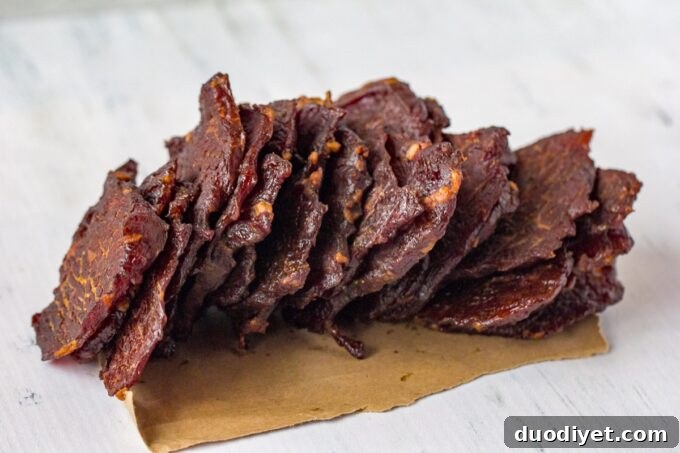
What ingredients are in the bulgogi marinade?
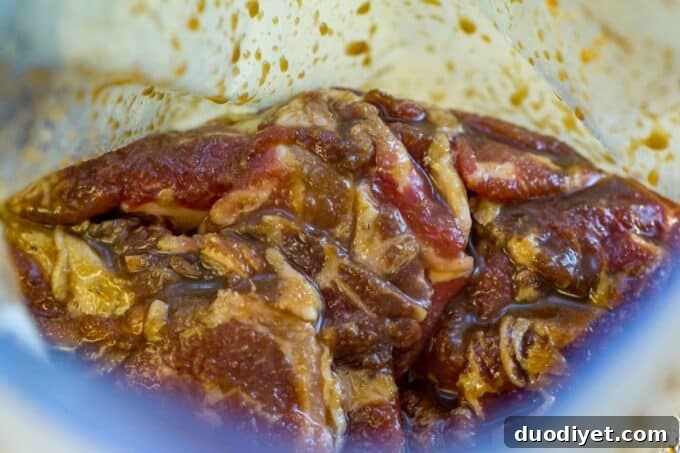
The bulgogi marinade is straightforward and relies on a few key components. If you don’t have gochujang, it’s optional; the marinade is still excellent without it. The Asian pear adds natural sweetness and helps tenderize the beef. If you can’t find Asian pear, a Fuji apple is an appropriate substitute.
- Garlic (fresh, chopped)
- Asian pear (or Fuji apple), grated or blended
- Soy sauce
- Sugar
- Ground black pepper
- Sesame oil
- Gochujang (optional)
What pellets or wood should I use to smoke bulgogi jerky?
Any quality hardwood pellets or smoking wood will complement the bulgogi flavors. Hickory, maple, or cherry are great choices—hickory gives a robust smokiness, maple adds a mild sweetness, and cherry provides a subtle fruity note. Use what you prefer or what’s available; the low-and-slow smoke is the important part.
How long do I need to smoke beef jerky?
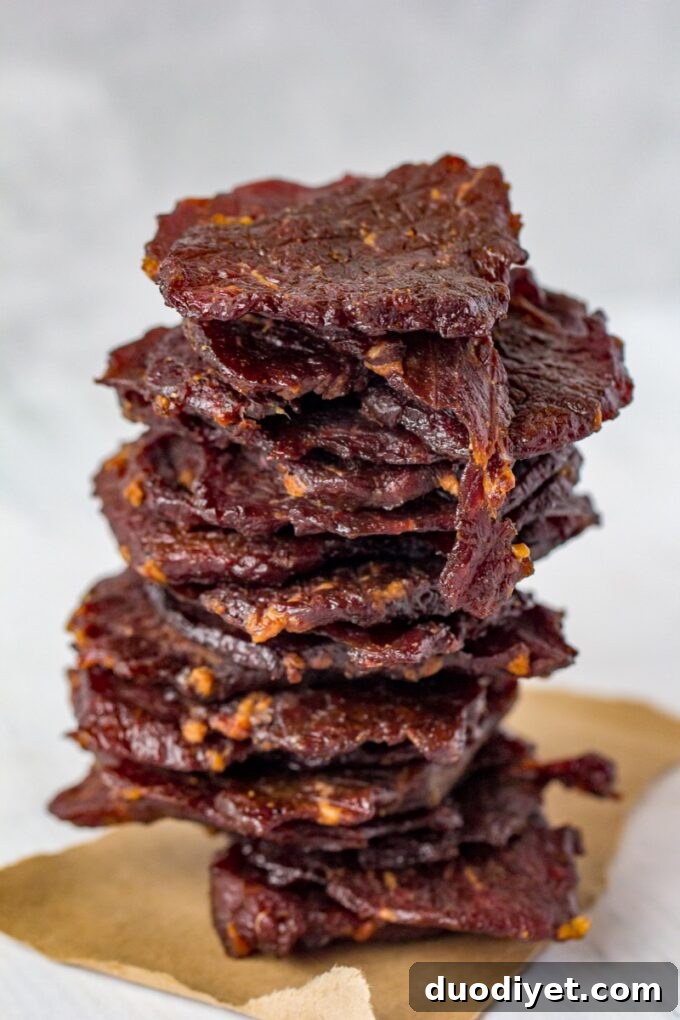
Smoking time varies with slice thickness, smoker temperature, ambient conditions, and how full the smoker is. Expect a minimum of about three hours for thin slices; thicker slices can take longer. Smoke at roughly 170–180°F and check texture frequently. The jerky should be dry to the touch and pliable—dried but not brittle. Use touch and feel rather than relying solely on time.
How do you store Korean-flavored beef jerky?
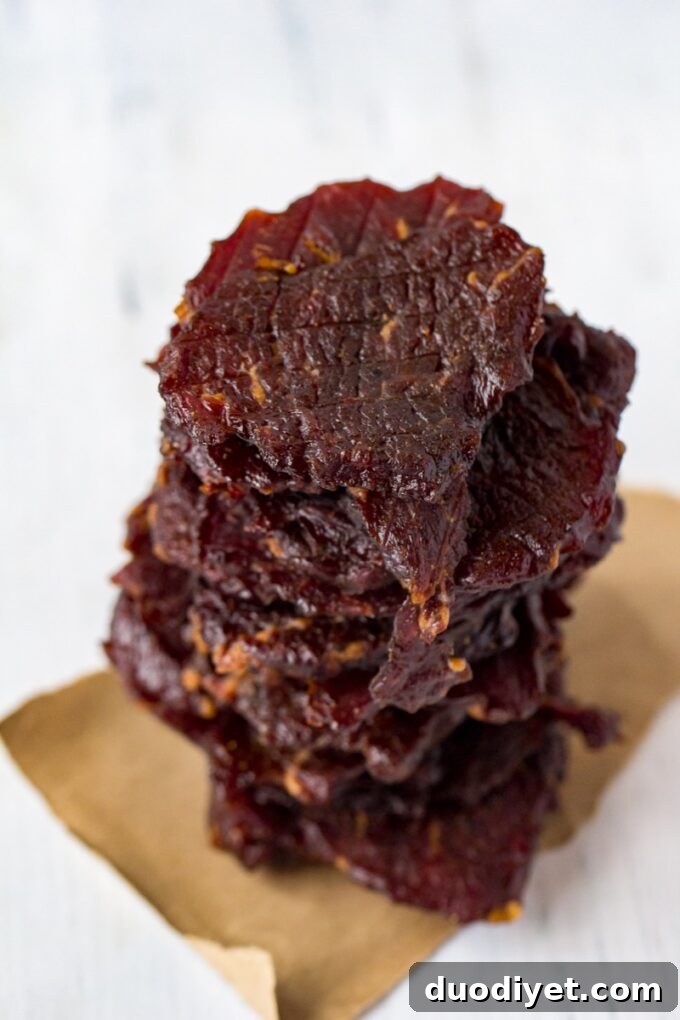
Store bulgogi beef jerky in the refrigerator in a sealed container. Because jerky is preserved only by drying and smoking, refrigeration will extend freshness and minimize risk. Eat refrigerated jerky within about a week for best quality, or freeze any extra for longer storage.
Can I use an oven to make this jerky?
Yes, an oven can work if you don’t have a smoker, but it won’t provide the same smoky depth. Place the meat on racks in a low-temperature oven and dry slowly, but consider adding a small smoked ingredient (like smoked salt) if you want to approximate the flavor of wood smoke. Be prepared for a slightly different result compared to true smoked jerky.
Traeger Beef Bulgogi Jerky — Recipe Card
Yield: 12 servings
A simple and authentic bulgogi marinade turns lean sliced beef into a sweet, savory, and smoky jerky. Marinate well, dry slowly, and enjoy.
Times
- Prep Time: 5 minutes
- Marinating Time: 4 hours (overnight preferred)
- Cook Time (smoking): 3–4 hours
- Total Time: ~7 hours (including marinating)
Ingredients
- 4 pounds round steak, thinly sliced
- 7 cloves garlic, chopped
- ½ Asian pear (or Fuji apple), grated
- 1 cup soy sauce
- 1 cup sugar
- ½ tablespoon ground black pepper
- ¼ cup sesame oil
- ¼ cup gochujang (optional)
Instructions
- Combine garlic, pear (or apple), soy sauce, sugar, black pepper, sesame oil, and gochujang (if using) in a blender or food processor. Blend until smooth and combined.
- Pour the marinade over the thinly sliced beef, mixing to coat evenly. Refrigerate and marinate for at least 4 hours, preferably overnight, stirring occasionally so all slices absorb flavor.
- Preheat your smoker or grill to 170–180°F.
- Remove the meat from the marinade and pat slices dry with paper towels to remove excess liquid. Arrange the slices in a single layer on jerky racks or smoker grates.
- Smoke for 3–4 hours, checking for desired dryness. Jerky should be dry, pliable, and slightly chewy but not brittle.
- Cool the jerky, then store in a sealed container in the refrigerator. Consume within a week or freeze for longer storage.
Nutrition (estimate per serving)
Calories: 468 | Total Fat: 32g | Saturated Fat: 13g | Cholesterol: 118mg | Sodium: 452mg | Carbohydrates: 7g | Sugar: 5g | Protein: 38g
Nutrition data is an estimate. If you need precise values for medical reasons, consult a trusted nutrition resource.