
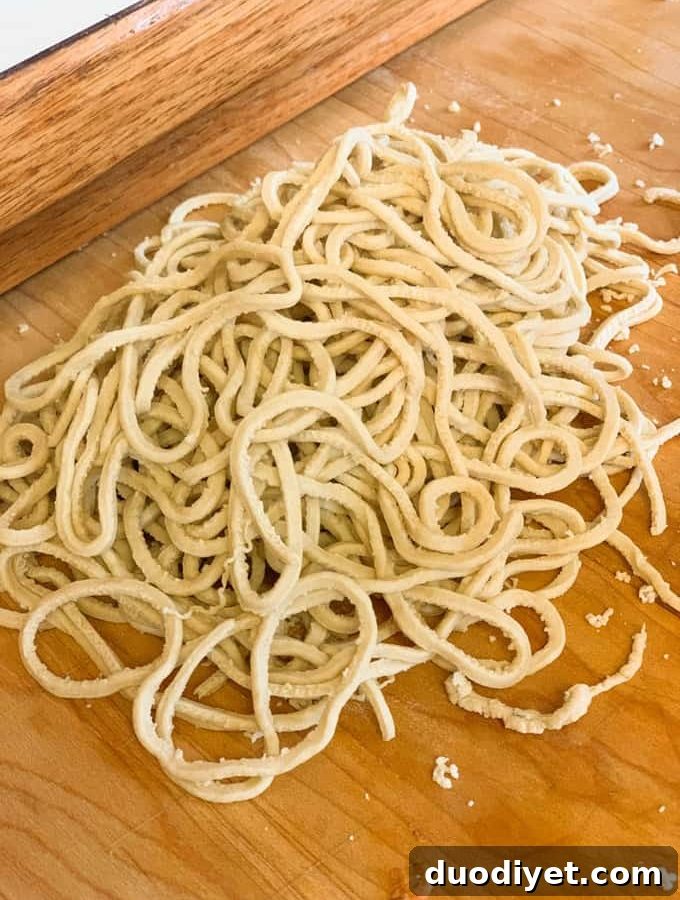
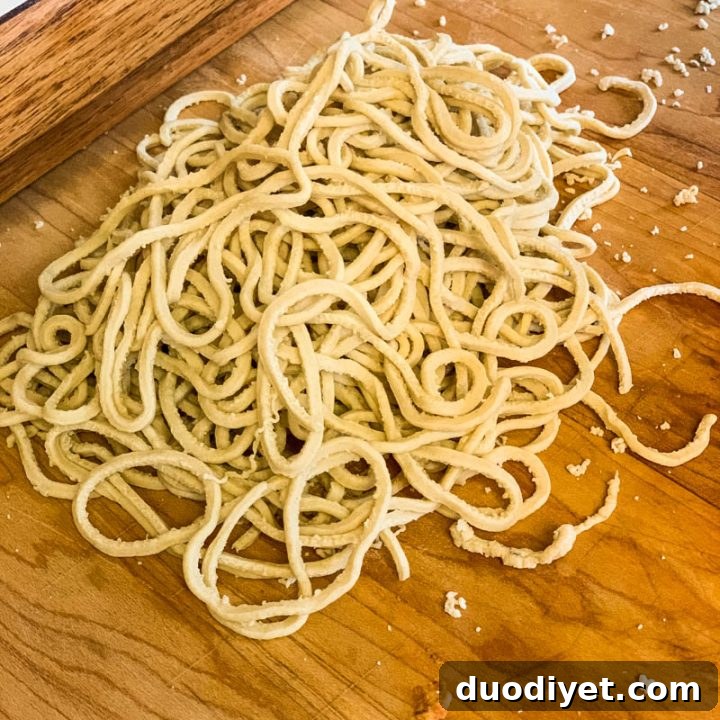
Homemade Ramen Noodles are a must-try for any serious ramen lover. They take a bit of time, but the technique is straightforward. Special tools make the process easier—especially a stand mixer and a pasta machine—but you can make them by hand if you prefer.

Homemade Ramen Noodles
There are many variations of homemade ramen noodles online, but they all share the same basic ingredients: wheat flour, water, salt, and an alkaline solution called kansui. The result should be noodles with a firm, springy bite that hold up well in hot broth.
Wheat flour. Water. Salt. Kansui.
What is Kansui?
Kansui is an alkaline water used in ramen dough that gives the noodles their characteristic texture and slight yellow color. Commercial kansui can be hard to obtain in some regions, but you can easily make a homemade version by baking baking soda to increase its alkalinity. This simple transformation yields a safe, pantry-friendly substitute that works well in noodle dough.
I didn’t invent this technique—many cooks recommend the same method—but it’s reliable and produces excellent noodles. Below I share the kansui method and a full recipe for making ramen noodles at home.
Use these noodles in a spicy tonkotsu miso ramen for a rich, satisfying bowl.
Tips for Success
Making homemade ramen noodles is approachable, but a few tips will help you avoid common pitfalls. The dough is intentionally drier than most pasta doughs, so expect a firmer texture during mixing and rolling. If you have a stand mixer and a pasta machine, use them—they make the job far easier and more consistent.
Use a mixer with a dough hook
A stand mixer with a dough hook is very helpful because the dough is fairly dry and takes a while to come together. If you knead by hand, be prepared for a workout and consider wearing gloves—homemade kansui is alkaline and can irritate skin.
More Soup Recipes

A pasta machine helps
A pasta machine makes it much easier to roll this firm dough thinly and evenly. You can use a rolling pin and a sharp knife, but it adds extra effort and makes consistent thickness harder to achieve. If you’re trying noodle-making for the first time, a basic pasta roller and cutter will greatly speed things up and improve results.
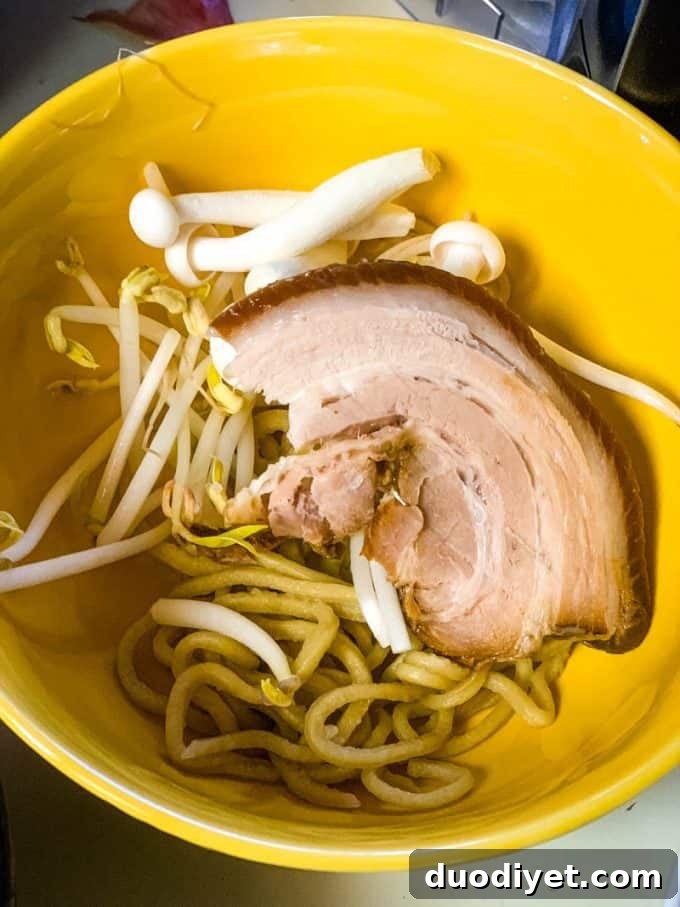
If you plan to serve your noodles in a tonkotsu or other rich broth, get the broth started early so everything comes together hot and ready. Fresh noodles cook quickly and finish their cooking in the hot bowl.

Pin for Later

Homemade Kansui
Homemade kansui is an easy alkaline powder you can make from baking soda. It’s used to give ramen noodles their distinctive chew and color.
1 minute
1 hour
1 hour 1 minute
Ingredients
- ¼ cup baking soda
Instructions
- Preheat the oven to 250°F (about 120°C) and line a baking tray with foil.
- Spread the baking soda evenly on the tray and bake for 1 hour. This converts it into a more alkaline form suitable for kansui.
- Let the baked baking soda cool, then store it in an airtight container until needed. Avoid direct contact with eyes and prolonged skin contact.
Notes
Method adapted from popular noodle-making resources such as Omnivore’s Cookbook.
Nutrition Information:
Amount Per Serving: Calories: 0 • Sodium: 0mg
Homemade Ramen Noodles
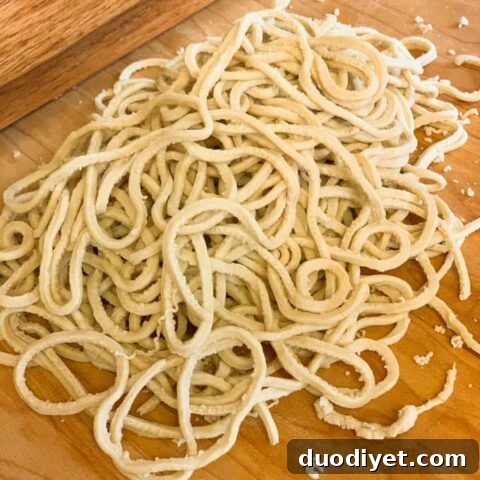
Make a large batch and freeze extras after cutting for a quick ramen shortcut later. These noodles have a satisfying bite and hold up well in rich broths.
15 minutes
1 minute (blanching)
4 hours (resting)
4 hours 16 minutes
Ingredients
- 4 cups bread flour
- 1 cup warm water
- 2 teaspoons kansui (see recipe above)
Instructions
- Combine the flour, kansui, and warm water in a stand mixer fitted with a dough hook. Mix on medium speed for 8–10 minutes. The dough will be fairly dry; add a little water only if it won’t come together at all. Aim for a dough that just holds together.
- Wrap the dough and refrigerate for 3 hours to relax and hydrate.
- Remove the dough from the fridge and let it sit at room temperature for 1 hour before rolling.
- Divide the dough into four pieces and flatten each slightly with your hand.
- Using a pasta machine on the thickest setting, roll each piece through several times, folding and rolling to develop a smooth sheet. The dough may break at first but will come together after a few passes.
- Continue passing the sheets through the machine until you reach about the “3” setting on most home pasta machines (a thin, but not paper-thin, sheet).
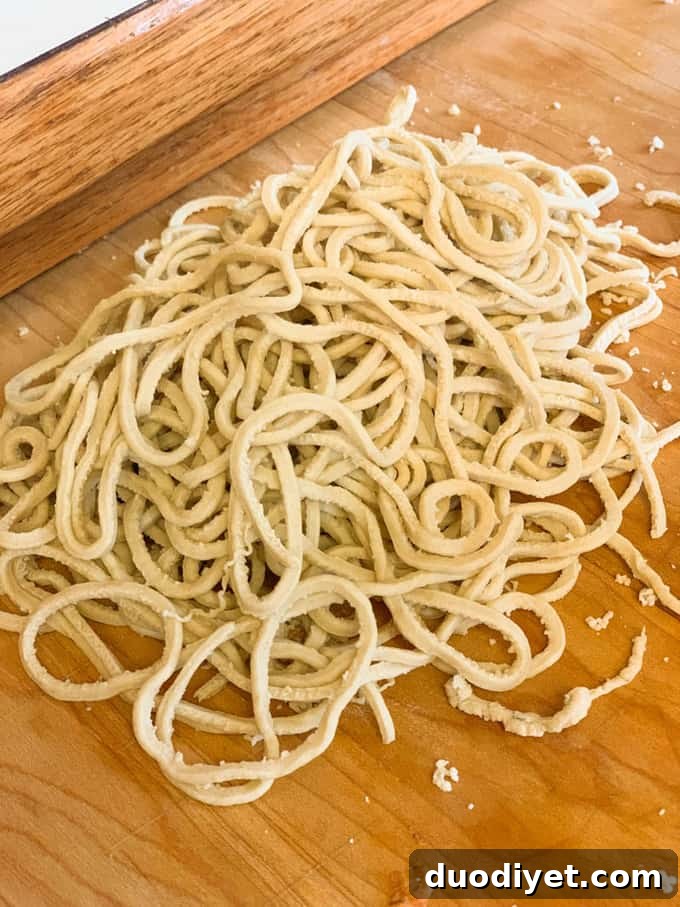
- Cut the sheets with the spaghetti cutter or slice thinly with a sharp knife. Toss the cut noodles with a little flour if they stick.
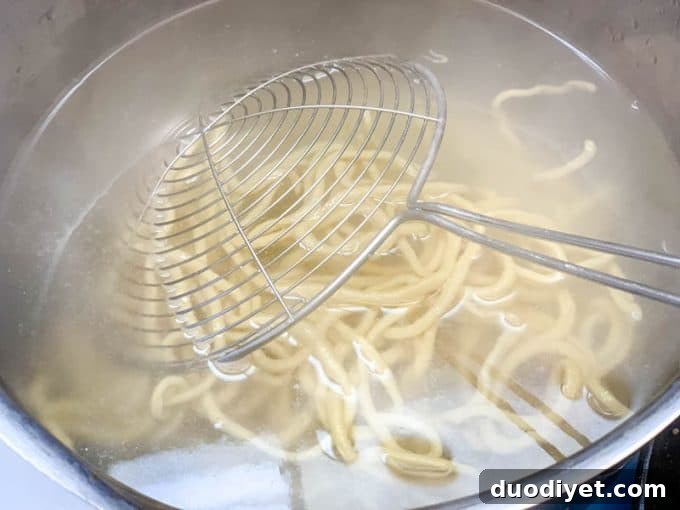
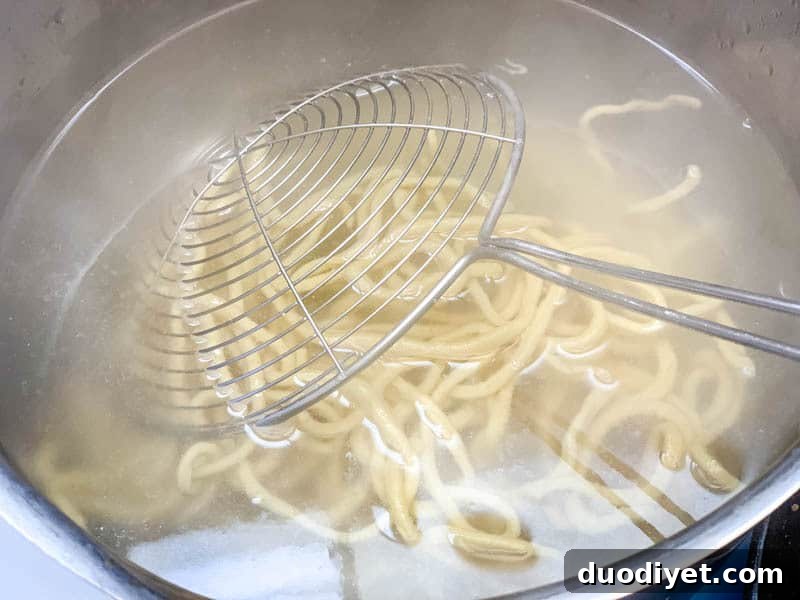
- Cook the noodles in well-salted boiling water in small batches for about 1 minute. They will finish cooking once placed in the hot ramen broth.
Notes
This recipe is inspired by widely shared homemade ramen techniques and adapted for home kitchens.
Recommended Tools
Helpful tools for making these noodles: pasta machine, heavy-duty mixer, and a collapsible drying rack for pasta.
- Pasta machine (basic manual roller and cutter)
- Stand mixer with dough hook (easier for dry doughs)
- Collapsible pasta drying rack
Nutrition Information:
Yield: 6 servings
Amount Per Serving: Calories: 330 • Total Fat: 2g • Sodium: 3mg • Carbohydrates: 66g • Protein: 11g