
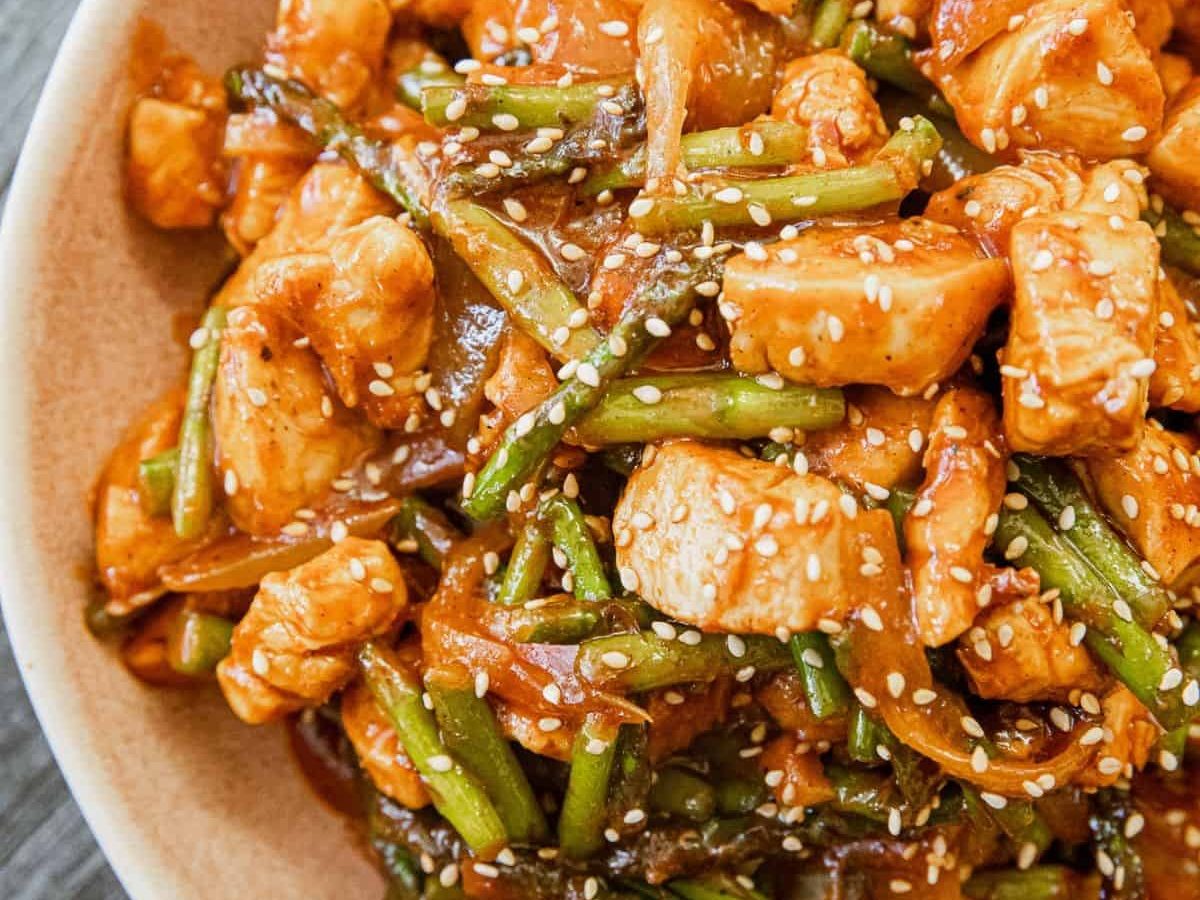
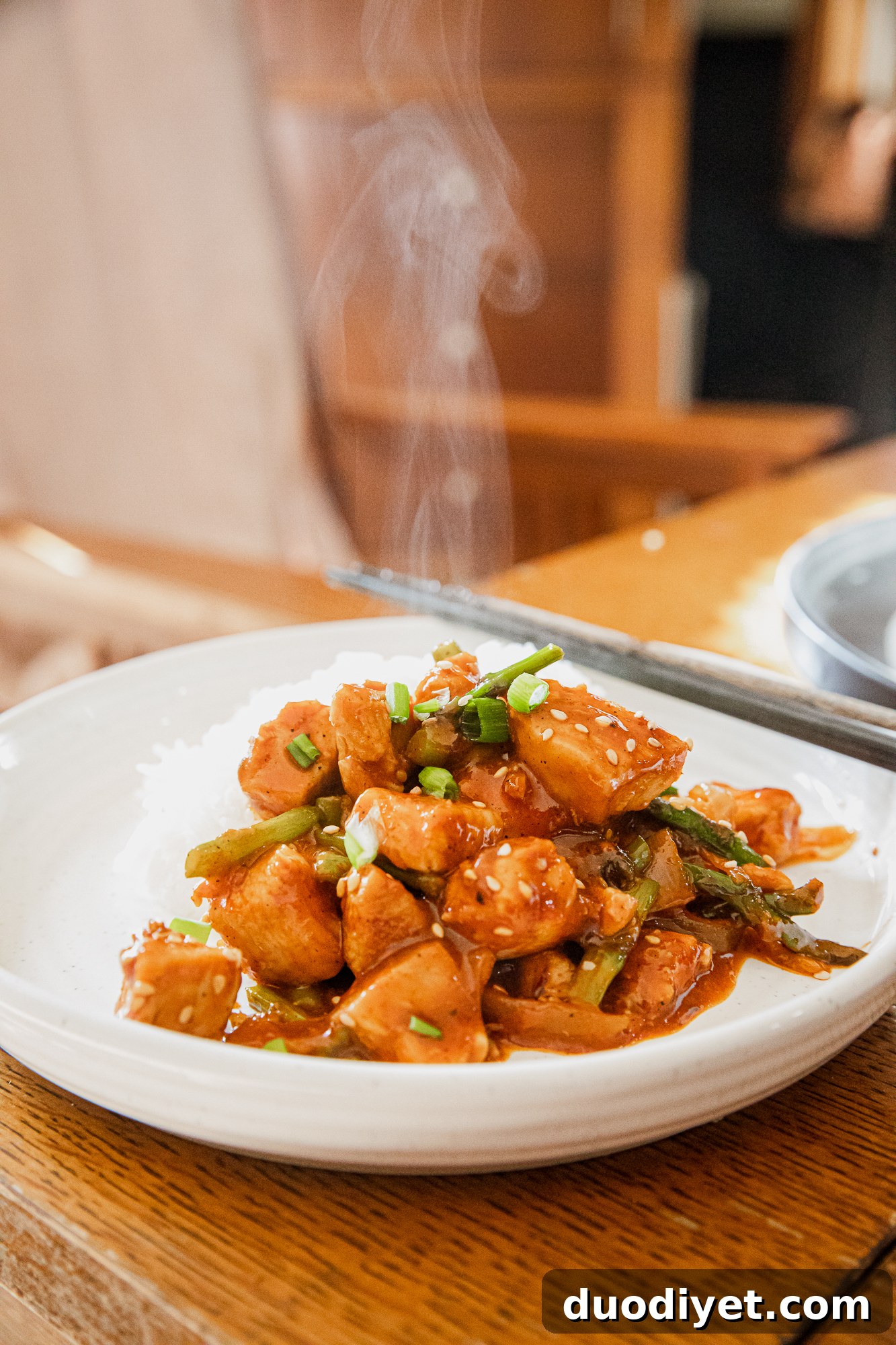
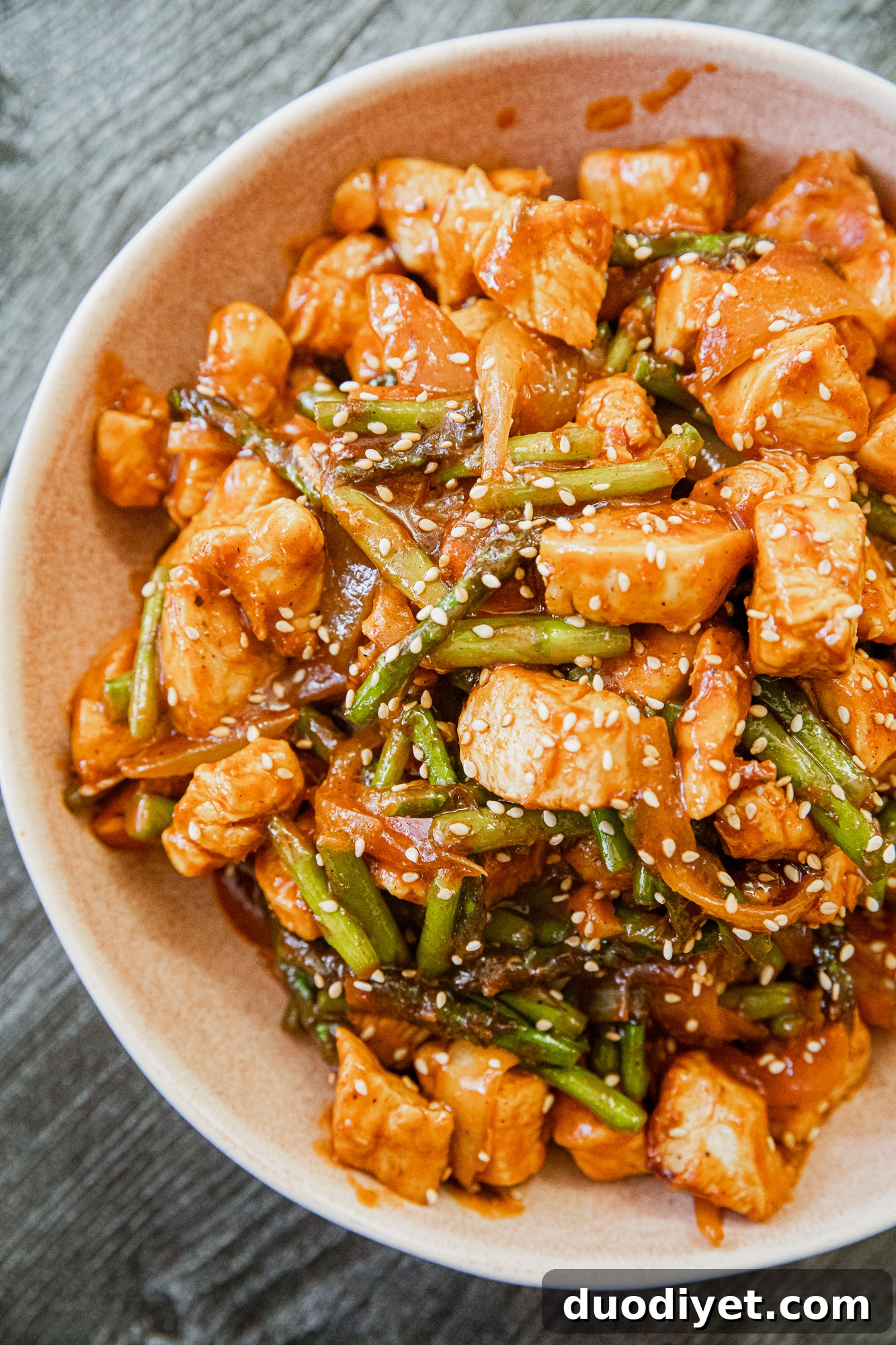
This Gochujang Chicken Stir-Fry is a staple in my recipe rotation. It’s a straightforward stir-fry finished with a spicy, well-balanced sauce built around gochujang, a beloved Korean chili paste. Quick to make and full of savory, sweet, and spicy notes, it’s perfect for weeknights or any time you want a satisfying one-pan meal.
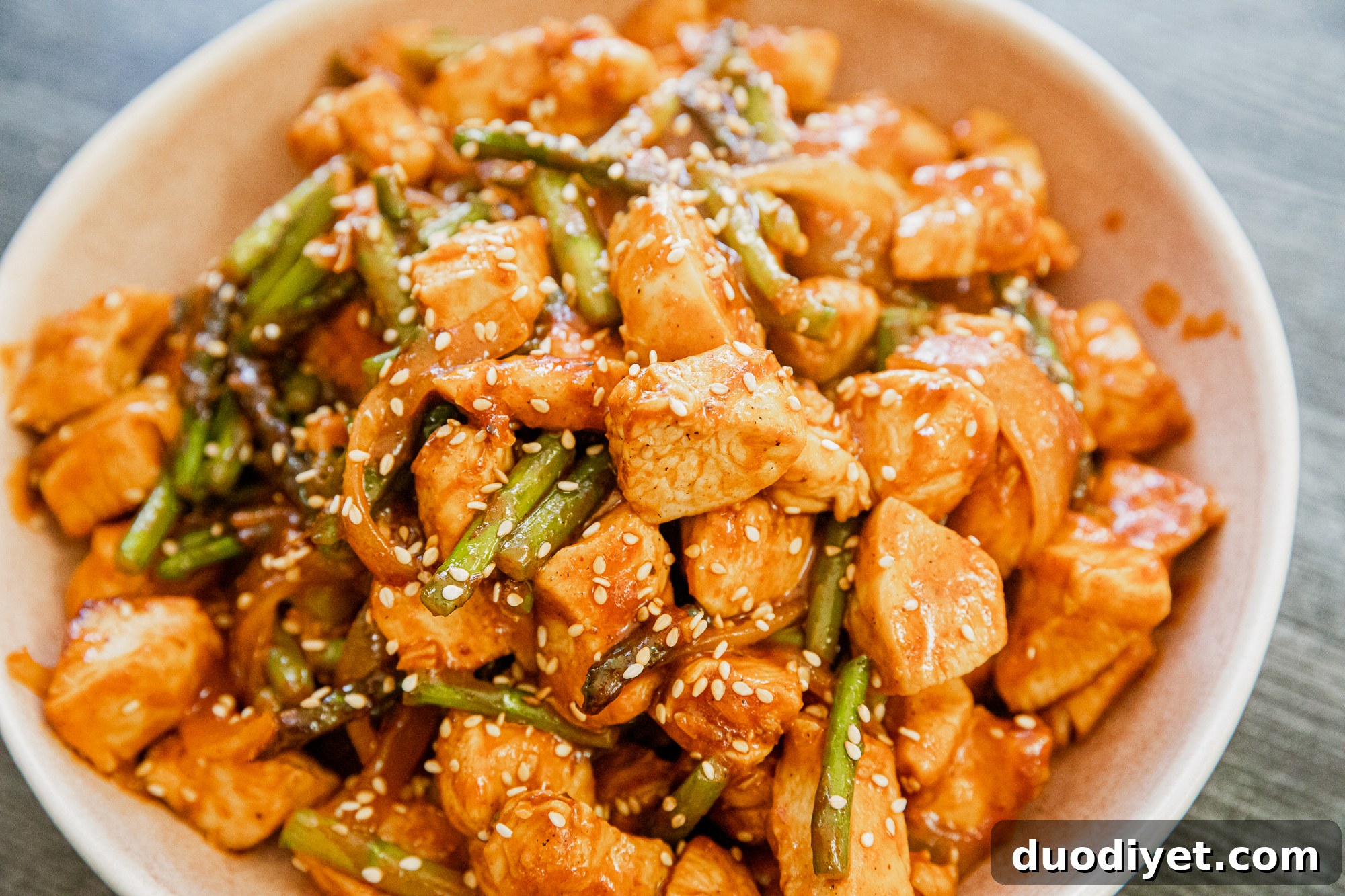
Gochujang Chicken Stir Fry
Chicken + vegetables + an addictive stir-fry sauce featuring gochujang, soy sauce, mirin, garlic, and Korean chili flakes — these simple components transform an ordinary stir-fry into something exceptional.
I keep these sauce staples on hand at all times. If you don’t cook a lot of Asian food, you might need a quick trip to the store, but it’s worth it: gochujang keeps a long time in the fridge, so a larger tub is a smart buy.
Review highlight: “This was delicious and went over really well with the family! I added a bit more brown sugar to balance the sauce.” — Alex
Why You’ll Love This Dish
- Big flavor fast — cooks in under 20 minutes and delivers bold, spicy flavor.
- Customizable heat — easily adjust the spice with more or less gochujang and chili powder.
- Balanced sauce — a touch sweet, deeply savory, and pleasantly spicy.
- Simple ingredients — no complicated steps or obscure items required.
- Veggie-packed — a complete meal from one pan when paired with rice or noodles.
Recipe Shopping List
Here’s what you’ll want to have on hand to make this recipe. For exact amounts, see the recipe card below.
- Neutral oil — avocado, canola, or another high-heat oil for stir-frying.
- Boneless, skinless chicken breast — quick-cooking and lean; chicken thighs are a juicy alternative.
- Salt, black pepper, garlic powder — basic seasoning for the chicken.
- Sesame oil — used sparingly at the end for nutty aroma and flavor.
- Asparagus — crisp and fast to cook; can be swapped for broccoli, green beans, or bell peppers.
- Gochujang — Korean fermented chili paste that delivers heat, tang, and umami.
- Minced garlic — adds aromatic sharpness to the sauce.
- Korean chili powder (gochugaru) — optional for extra heat and mild smokiness.
- Soy sauce — savory backbone of the sauce.
- Dark brown sugar — balances heat with rich sweetness.
- Cornstarch — thickens the sauce so it clings to the chicken and vegetables.
- Mirin — brings mild sweetness and acidity; rice vinegar plus sugar works as a substitute.
- Water — adjusts sauce consistency.
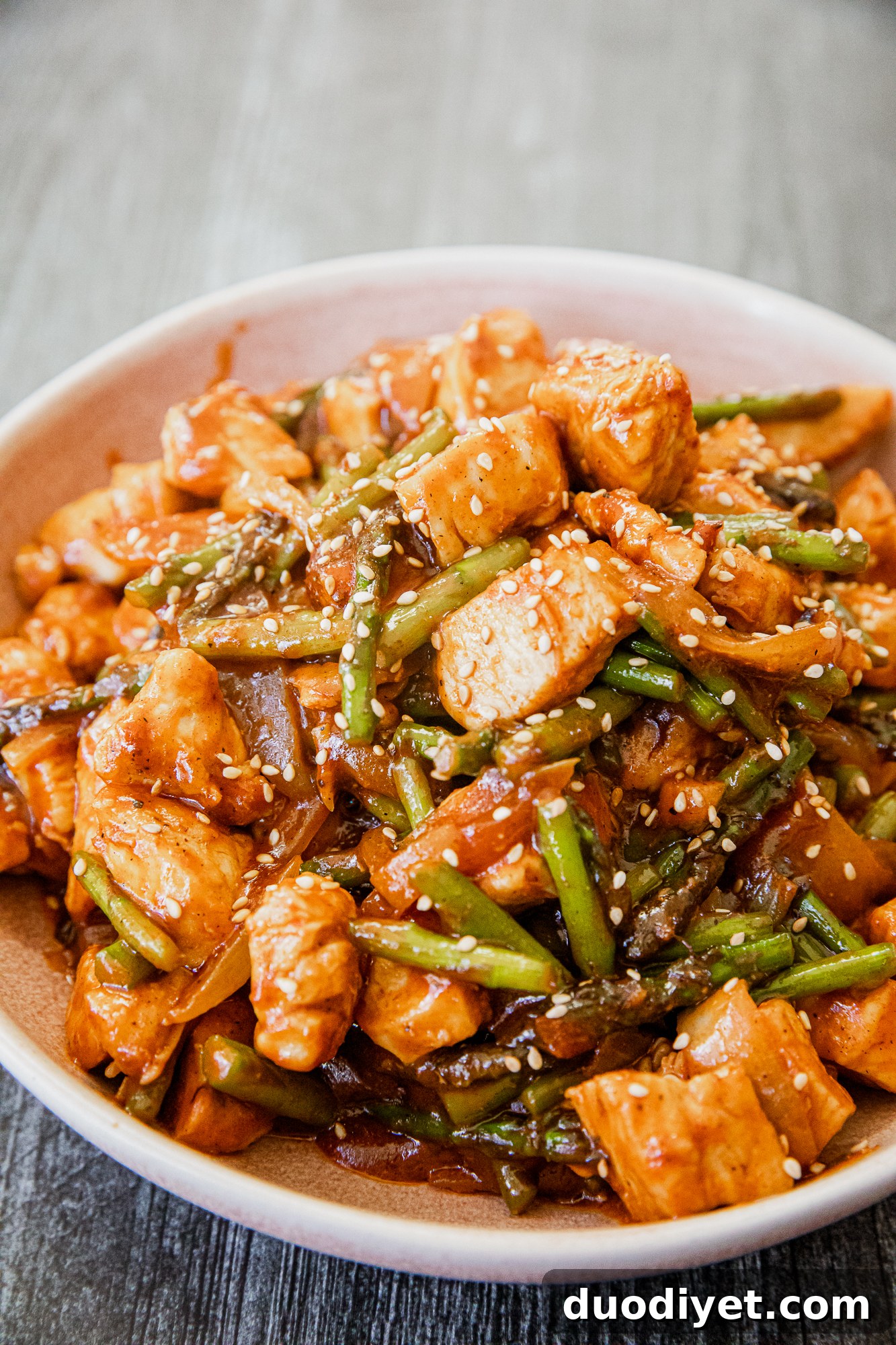
How To Make This Recipe
This overview gives you the workflow. Use the full recipe card below while cooking for precise measurements and timing.
- Mix the sauce — whisk together gochujang, soy sauce, mirin, brown sugar, cornstarch, garlic, chili powder (if using), and water; set aside.
- Season the chicken — toss diced chicken with salt, pepper, garlic powder, and a drizzle of sesame oil.
- Stir-fry the chicken — in a hot wok or skillet with oil, cook chicken in small batches until browned and cooked through; set aside.
- Cook the vegetables — stir-fry asparagus (or chosen vegetables) until tender-crisp.
- Combine and finish — return chicken to the pan, pour in the sauce, and stir until everything is evenly coated and the sauce thickens.
Recipe Tips
- Prep the sauce and all ingredients before you start. Stir-frying moves quickly and everything should be within arm’s reach.
- Use the highest heat you can safely manage and a high-heat oil. The sear from a very hot pan is a key part of classic stir-fry flavor.
- Cook in small batches to avoid crowding the pan, which causes steaming instead of browning.
- If you prefer a milder dish, omit the added Korean chili powder; gochujang alone often provides enough warmth for most people.
- Don’t stress about perfection — even a looser approach will still produce a delicious meal.
Recipe FAQ
Gochujang is a Korean fermented chili paste made from red chili, soybeans, glutinous rice powder, and salt. It’s spicy, slightly sweet, and adds deep umami to sauces, marinades, soups, and dressings.
Where can you buy gochujang?
Gochujang is widely available at many grocery stores in the Asian foods aisle and at Asian markets. It’s also sold online through many retailers.
Can I swap ingredients?
Yes. Substitute chicken with steak, pork, shrimp, or scallops if desired. Vegetables like mushrooms, carrots, broccoli, cauliflower, bok choy, snow peas, and bell peppers all work well. If you don’t have mirin, use sherry, Chinese cooking wine, or a splash of rice vinegar with a pinch of sugar.
Serve This With…
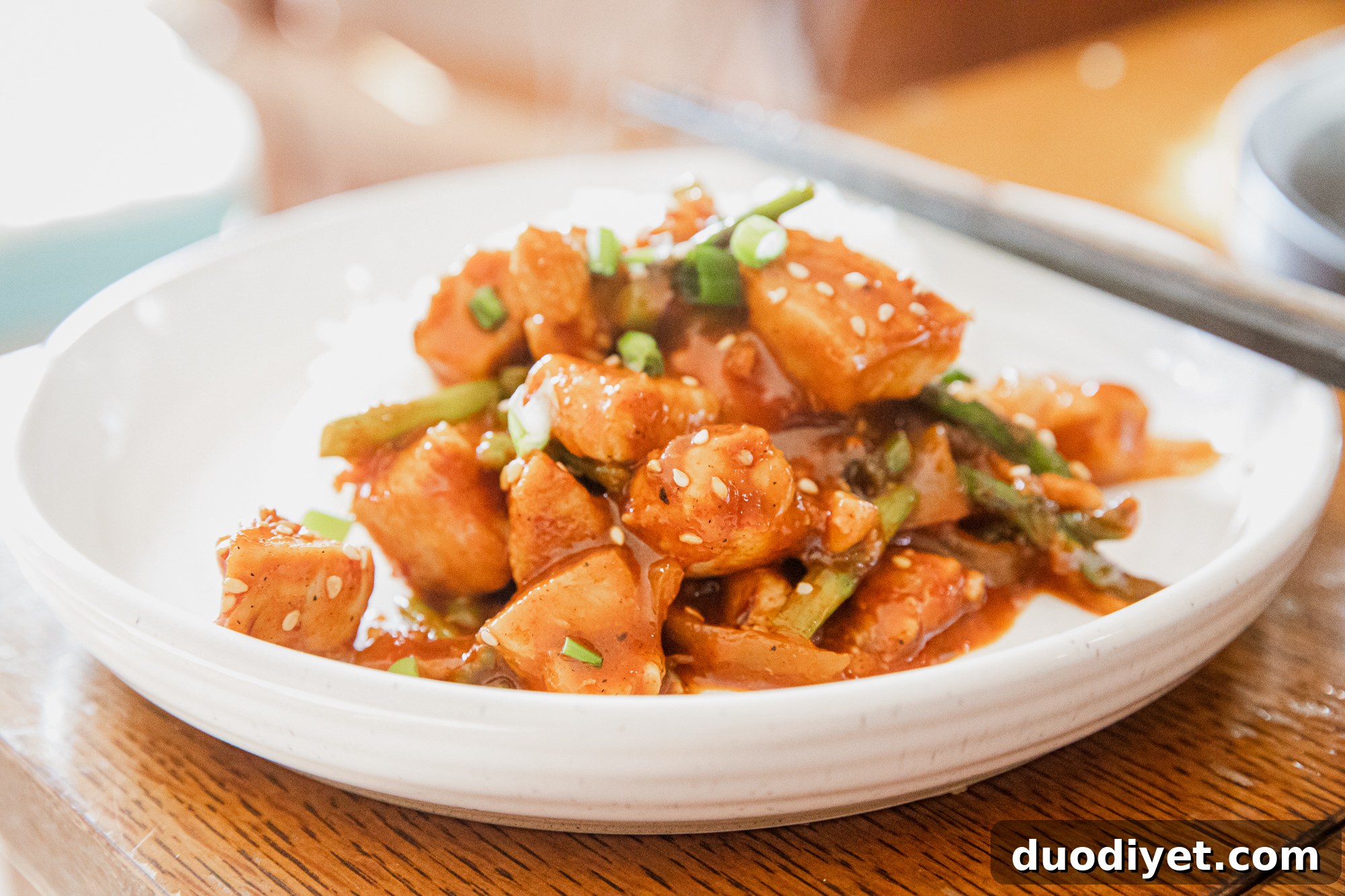
This stir-fry stands on its own but pairs beautifully with steamed rice (basmati or jasmine) or sturdy noodles like udon or lo mein — thin the sauce slightly with water if tossing with noodles. For a fuller spread, serve alongside homemade egg rolls, dumplings, or a simple green salad.
This sauce also works great over noodles. If serving with udon or lo mein, add a splash of water to loosen the sauce as needed.
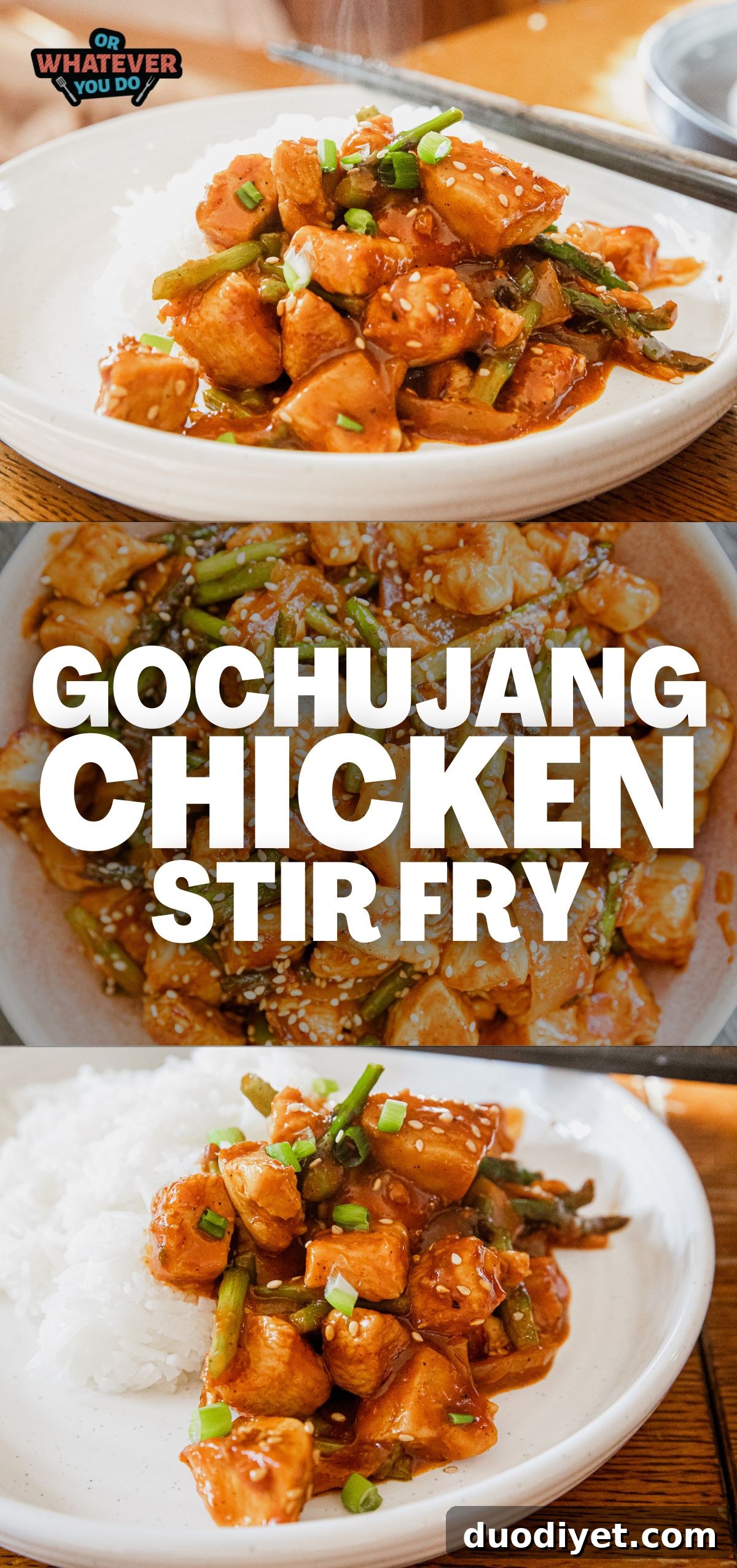
Gochujang Chicken Stir-Fry — Recipe Card
Yield: 8 servings
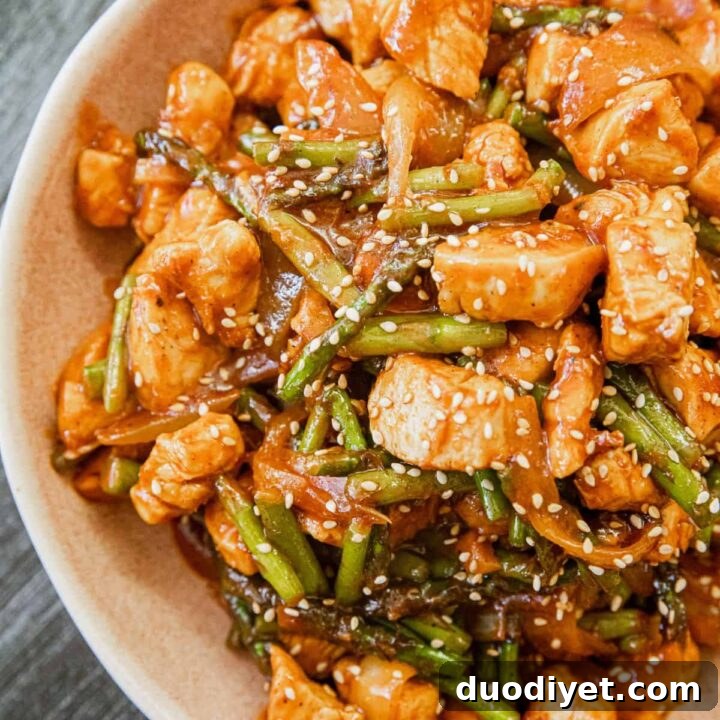
Super flavorful stir-fry made with a spicy gochujang sauce. Make extra sauce — it’s great on rice, noodles, and roasted vegetables.
Prep Time: 15 minutes Cook Time: 20 minutes Total Time: 35 minutes
Ingredients
- 3–4 tablespoons neutral oil
- 3 cups diced boneless, skinless chicken breast
- ½ teaspoon salt
- ¼ teaspoon black pepper
- ½ teaspoon garlic powder
- drizzle sesame oil
- 5 cups chopped asparagus (or substitute broccoli, green beans, or bell peppers)
- Sauce: ¼ cup gochujang, 1 teaspoon minced garlic, 1 tablespoon Korean chili powder (optional), 3 tablespoons soy sauce, 1 tablespoon dark brown sugar, 1 teaspoon cornstarch, 1 tablespoon mirin (or substitute), 1 tablespoon water
Instructions
- Whisk together the sauce ingredients and set aside.
- Toss the chicken with salt, pepper, garlic powder, and a drizzle of sesame oil. Set aside.
- Heat a wok or large skillet over high heat with 1 tablespoon oil until very hot.
- Cook the chicken in 1–2 cup batches until golden and cooked through. Remove and keep warm.
- Add more oil as needed and cook the vegetables for 2–3 minutes until tender-crisp; work in batches if necessary.
- Return the chicken to the pan, pour in the sauce, and stir continuously until the sauce thickens and coats everything.
- Serve over rice, noodles, or enjoy on its own.
Nutrition (per serving, estimate)
Calories: 223 • Total Fat: 4g • Saturated Fat: 1g • Cholesterol: 80mg • Sodium: 783mg • Carbohydrates: 15g • Fiber: 4g • Sugar: 7g • Protein: 34g
Nutrition data is an estimate. For medical or dietary needs, consult a trusted nutrition source.